Feeds:
Posts
Comments

Archive for the ‘Food’ Category

I have a few favourite gadgets in the Vicarage kitchen. Today I’d like to introduce you to my best pastry-making tool: a paint scraper.

I used to make most of my pastry in my food processor, but I found that it was too easy to blitz it and end up with the fat chopped too small and the pastry too tough. Since I started using the paint scraper (NB I’ve never scraped paint with this one) I’ve been able to ensure that plenty of gravel-sized pieces of butter/lard/hard marg remain. This gives me a lovely flakey shortcrust pastry that seems to go down very well with consumers.

It’s therapeutic to chop the fat into the flour, too – sometimes I imagine that I am chopping junk mail into tiny pieces. And no fat in the fingernails either – my pet hate with pastry-making. So there you are – a cheap and useful gadget that can also be used to remove welded Weetabix from the kitchen table. Every kitchen should have one.

Read Full Post »

This recipe is a Vicarage favourite that crosses the seasons – it’s hearty enough for winter, but the light sauce means that it suits a chilly day in June aswell. It’s also speedy, cooking in about 20 minutes. So if you can pre-prepare most of the veg, you can get it on the table within half an hour of getting in from work, or the swimming lesson or whatever. It was swimming for us yesterday – and the Queen and the Joker had to get to Kids Club, fed, in less than an hour after our return.

Ingredients

  • Pork steaks (I chopped the ones I had in half and so fed six of us, with seconds, from a pack of four) or chops
  • Bacon, about 4 rashers, chopped
  • Large onion, roughly chopped
  • Potatoes and vegetables – select from carrots, squash, sweet potatoes, parsnips, leeks – all chunked. I use a smallish potato per person plus a couple of each of about 4 other vegetables to feed six of us.
  • Cabbage, sliced – I used about half a Savoy
  • 2-3 bay leaves
  • 1 tbspn vegetable (or chicken) bouillion powder or a stock cube
  • 200ml cider

Using a large pan or cast iron casserole dish, fry the pork in butter to brown and then set aside. Then add the bacon and fry until a little crispy. Then fry the onion until soft and add the vegetables and fry them a little too. Then add cider and enough water to almost cover the veg. Add your bouillion powder and bay leaves and bring the liquid to the boil, then turn it down to a simmer. Pop the pork steaks back on top, cover the pan and set your pinger to 15 mins. After 15 minutes, pop in the shredded cabbage and leave for another 5 minutes or so, until the vegetables are all tender. Serve in soup plates if you can, with spoons handy to slurp up the lovely broth or chunky bread to mop it up if you’re very hungry.

If you’re lucky, there may be some leftover veg to have with hunks of bread for lunch tomorrow…

Read Full Post »

Here’s my take on Anzac biscuits – a fast and fabulous recipe which produces a great mound of tasty coconut and oat treats. I can produce about 40 in a single batch and they are extremely popular with all ages. They are also egg-free, so good for vegans or Asian vegetarians.

Ingredients

  • 3oz/75g porridge oats
  • 3oz/75g desiccated coconut
  • 4oz/100g plain flour
  • 4oz/100g sugar
  • 40z/100g butter or marg (soft is fine)
  • 1tbspn golden syrup
  • 1tspn bicarbonate of soda, dissolved in 2 tbspn hot water

Mix the dry ingredients in a large bowl. Meanwhile, melt the marg and golden syrup in a jug in the microwave, or a pan on the stove if you prefer. Add the bicarb to the hot water in a small cup or dish and then stir the fizzy mix into the warm marg/syrup combo. Then add the warm wet ingredients to the dry ones and stir in carefully.

For smallish Hobnob size biscuits use teaspoons of mixture – I can fit 16 on a standard baking sheet (covered with silicone lining), leaving room for spreading. Bake at about 180ºC (Gas Mark 4) for 8-12 minutes until the biscuits are golden all over and most have flattened out after rising. Transfer to a rack for cooling after they’ve had a few minutes to firm up.

The gallery below shows some slightly larger ones made using dessertspoonfuls of the mixture which gives you about 24 biscuits from a single batch.

This slideshow requires JavaScript.

Read Full Post »

Easy Chopstix

At Christmas, my sister bought some great easy-use chopsticks for the kids. They are joined together at the top so are a good way for kids to learn to eat Chinese food in a fun way and not starve. It’s an excellent way to learn not to drop food on yourself. And you can always use a spoon at the end!

This slideshow requires JavaScript.

Read Full Post »

The Joker had his ninth birthday party a couple of weeks ago. He had an old-fashioned party games do in the church hall. Since the Joker and his brother are currently obsessed with Dr Who, the theme for the party was obvious. A bit of crowd-sourcing of games using Google and Twitter and we were sorted.

The Joker with his amazing cake. And an alien jelly.

The wonderful Bee, fiancee to Rocky and Vicar’s-Wife-In-Training, made a fabulous topper for the cake – Dr Who and Amy standing in front of the Tardis. Since my only cake decorating method is slathering butter icing and sweeties all over and sticking a few plastic toys on, this was a great improvement in looks and sophistication. The Joker placed his Christmas collection of Dr Who incarnations around the cake for the full effect you see above.

Our games were heavily Dr Who influenced – even playing musical chairs to the Dr Who theme tune. And as well as the cake, I produced alien jellies – with added sweetie snake lurking inside the lime jelly beneath the spray cream. We didn’t quite manage the games within a story party that one organised Twitter friend sent me, but we had lots of fun. And the tuna sandwiches were eaten up and not the jam ones. Kids and catering, eh? You never know what will be popular. Apart from cake and sweeties, obviously.

Read Full Post »

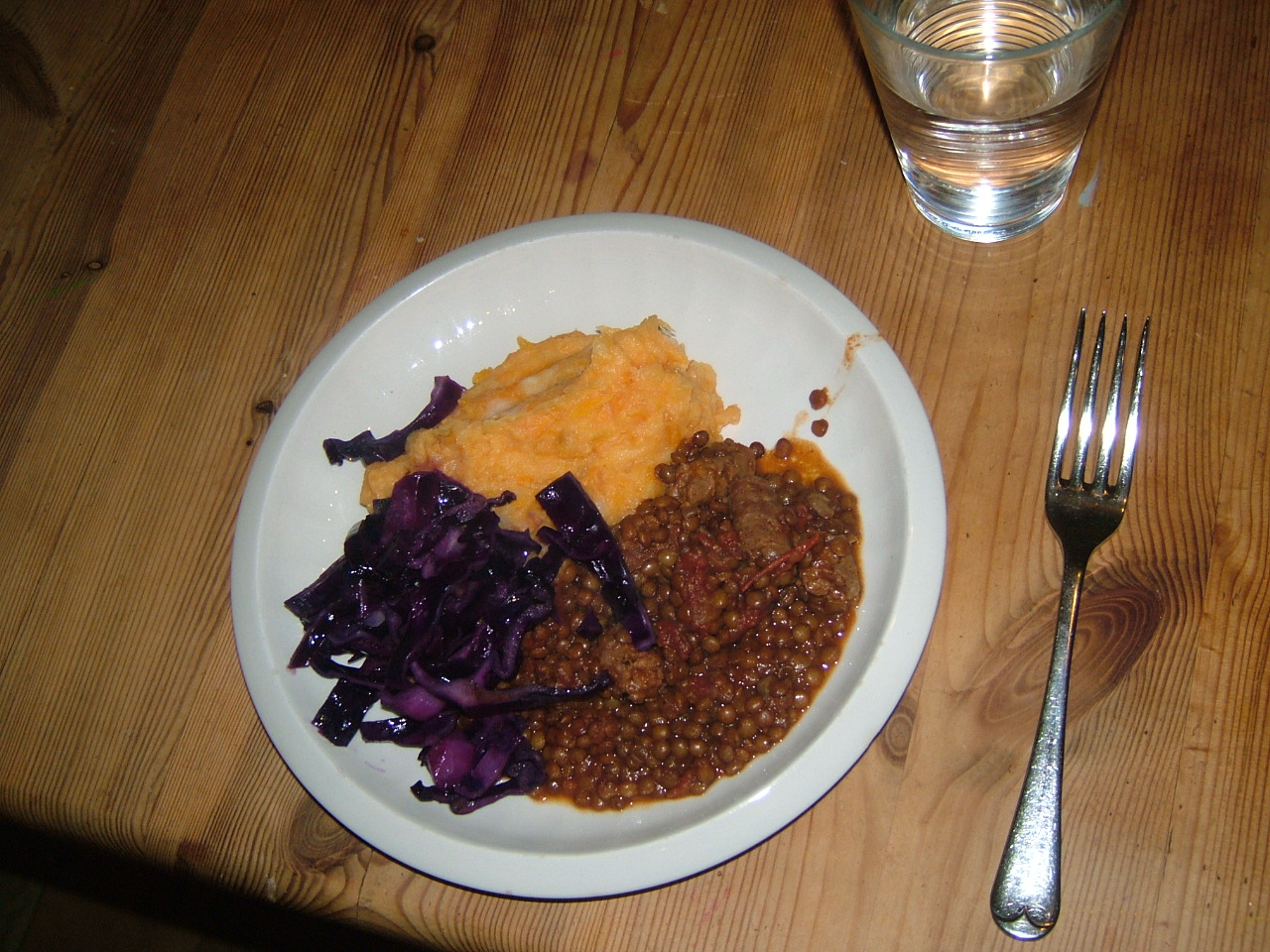
One of the things I love about my Vicarage cooker (my treat when we moved here) is its small slow oven. The slow oven is a bit titchy – only big enough for one large pot or only a single baking sheet of meringues, but I am using it more and more for winter casseroles. Tonight I cooked sausage casserole – one of our top favourites which has a few variations but is always very popular with the kids (and grown ups too).

I make this using Sainsbury’s Taste the Difference chipolatas. I’d recommend using good quality ones as cheap ones can come out rather spongey. And you only need to use a single packet to feed a family and can get that for about £2 if there’s an offer on.
The Vicar's dinner

Ingredients

  • 1-2 onions, finely sliced
  • Pack of sausages
  • 2 cups (500ml) lentilles vertes or green lentils
  • Bay leaves, mixed herbs
  • Red wine (about a glassful) and stock
  • Optional – tin of tomatoes, chunked carrots

Brown the sausages in your casserole dish and then remove them to a plate or bowl whilst you pop in a little oil or butter and the onions. Leave the onions to get nice and soft then return the sausages, chopped up into bite sized chunks, to the pan. Tonight I chopped the sausages with a spatula before I removed them and fried the onions, otherwise you can slice them with a knife once removed – I recommend pinning them to the chopping board with a fork rather than fingers (I speak from experience of burnt fingers and escaping sausages).

To the onions and sausages add the lentils, bay leaves and herbs and wine and stock (I use hot water and vegetable stock powder). This evening’s casserole also included a tin of chopped tomatoes. The liquid needs to be added to a generous level above the lentils and sausages – say 5cm/2″ in your pan. This gives space for the lentils to swell and liquid to evaporate.

 Bring to the boil and then simmer for at least 1/2hr on the hob, or pop in a slow oven at about 140ºC (Gas Mark 1) for a couple of hours or more. The slow cooking method has the advantage of keeping the Vicarage kitchen warm, so this is obviously my preferred option.

I tend to check the casserole every hour or so if it’s in the oven, just to make sure that there is still enough liquid. If you’re adding carrots it’s best to do so about half an hour before the end of the cooking time, otherwise they can get a bit soggy. Add salt and pepper to taste before serving and add a little extra liquid if needed to ensure a bit of sauce to soak into the essential accompaniment of mash.

As you can see, I served the casserole with mashed sweet and normal potatoes, and some braised red cabbage. This is a great winter warmer and excellent value for money. We had leftovers that will do well with a bit of chunky bread for lunches whilst the kids are at shcool.

Read Full Post »

This recipe is cheeky because it involves minimal scone faffing ie rolling and cutting. And it’s cheekily zingy with strong cheese and a dose of spice. It’s also cheeky because it’s not that square, but I liked the alliteration for the title.

Ingredients

  • 1lb/450g self-raising flour
  • 2tspns baking powder
  • 1tspn salt
  • 1tspn smoked paprika (or paprika, or 1/2tspn chilli powder)
  • 4oz/100g butter
  • 7oz/200g grated cheddar (preferably mature) or other strong hard cheese
  • 2 eggs
  • Milk

Place flour, baking powder, salt and paprika in a mixing bowl. Add chopped butter and rub in until butter chunks are the size of smallish gravel. Stir in grated cheddar. Break eggs into a measuring jug and whisk, then add milk to make up 10floz/300ml of liquid. Add to the flour and stir in to make a soft dough.

Place dough in lined or greased small roasting tin (around 12″x9″/30cmx23cm). I just press it in lightly and it doesn’t always become a perfect rectangle and is often square-ish (hence the recipe title). Cook in a preheated oven at 230ºC (Gas 8, Fan 220ºC) for 15-20mins until the scone is golden, well risen and no longer doughy. It sometimes looks a little crisp on top but that’s fine. Turn out to cool on a wire rack then cut off squares or rectangles to eat as you like.

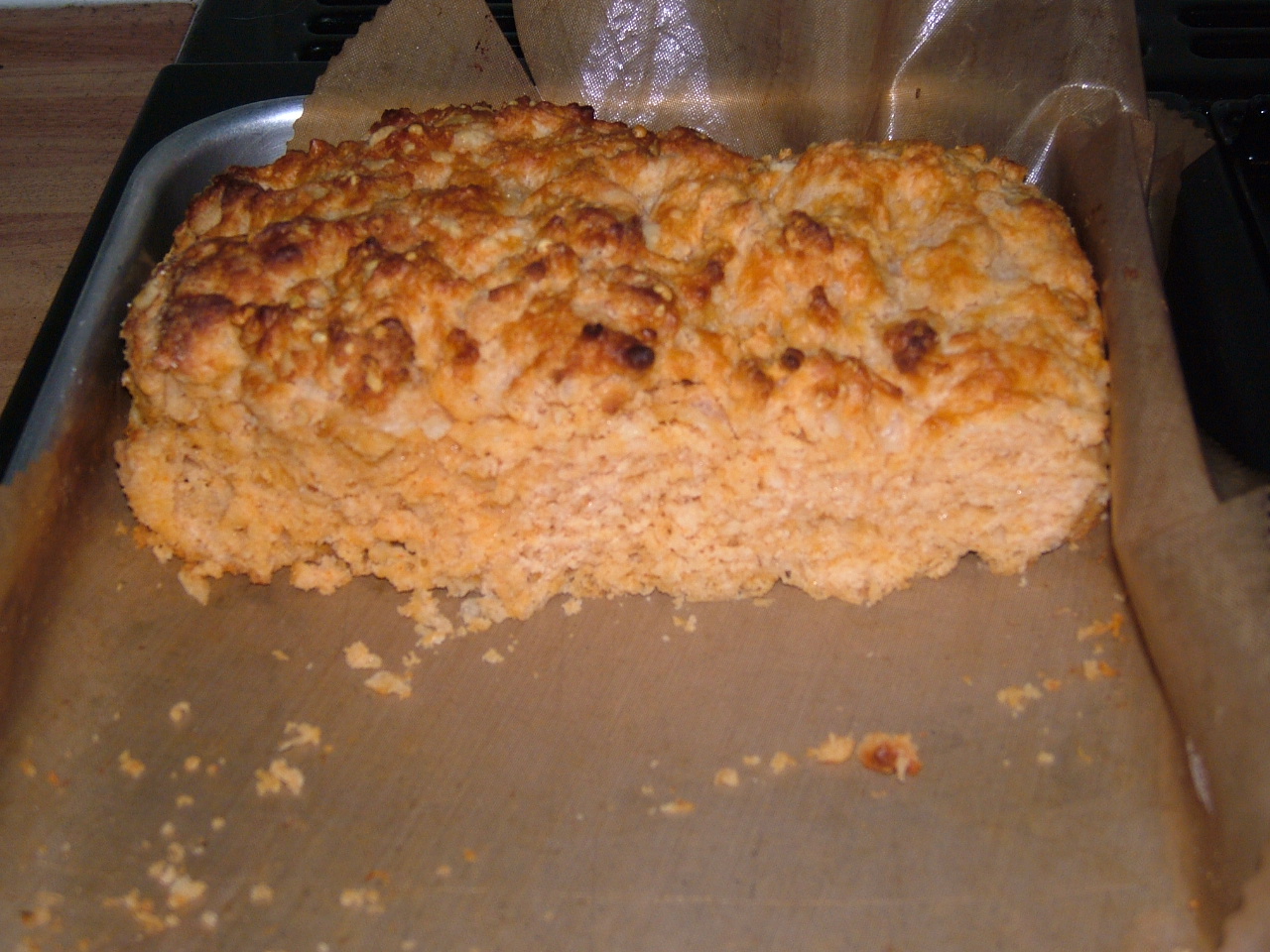
Didn't manage to get a pic of this before most was consumed!

This scone is fabulous on its own as a snack, but is also delicious served with soup or cold meats. It keeps 4-5 days in an air tight tin and is also very good toasted (which is how we ate up the remainder yesterday). It’s extremely fast to make so is a very useful recipe to have up your sleeve if you have only half an hour’s notice before lunch guests show up.

Read Full Post »

Things in parish have been a bit crazy since the new school term began and my blogging habit has rather dried up. But today I’ve just about got my act together and thought I’d share a great recipe for autumn – my mother-in-law’s lentil soup. The Vicar comes from a small town in the Scottish borders with views over heather clad hills and a high street of family run shops. This warming soup is very inexpensive and simple to make and feels like a little slice of old fashioned rural life. Lentils are especially great for those on low GI diets and for diabetics as they are low in carbohydrates and release their energy slowly.

Ingredients

  • 1 onion, chopped
  • 1 or 2 leeks, sliced
  • 2 or 3 carrots, sliced
  • Other diced vegetables such as swede, butternut squash or potatoes, even leftover veg from Sunday lunch such as mashed potato or runner beans can also be used
  • 1 cup (250ml) orange lentils
  • Ham stockcube (or genuine ham stock if you’ve cooked a ham recently, but usually I haven’t, or the ham’s been cooked in coke, which isn’t so great in soup)
  • Approx 1.5l boiling water

Gently fry the veg until softened, then add the lentils, stock cube and hot water. Simmer for about 20minutes until veggies and lentils are soft. Then use a stick blender to create a smooth soup. If you don’t have a blender, a potato masher will give you a slightly chunkier soup. The Vicar likes to add a lot of pepper – no need for salt because of the ham stock.

Serve with crusty brown bread if you remember to pick some up. This soup is very filling. I often make a double batch, which fills a casserole dish and keeps us going for Vicarage lunches for most of the week. Lentil soup has the strange property of thickening every time it is cooled, so you may have to add a little water on reheating or after freezing. It freezes brilliantly.

Read Full Post »

I found an impressive mushroom on our lawn yesterday and was wondering about eating it. I was under the misapprehension that there were only a few types of poisonous ones and it was likely to be fine.

Then I went googling and searching around the internet and it’s a lot more difficult than I thought it would be. So we’ve not eaten it – it’s sitting in my kitchen but I think it will just be going in the compost. I think I’m best to stick to the radishes and salad leaves I planted myself.

Bit of a pity, but best not to poison the family, eh?

Read Full Post »

Last week I had to bake for Cake & Chat and wanted something a little different. I also had a packet of rhubarb that I’d picked up on the reduced section at our local Morrison’s. And so here is a recipe for rhubarb pudding cake (I found the original online at a National Trust historic cakes site).

It went wonderfully with creme fraiche on Thursday and with cream on Sunday. I had to bake a second one this weekend as the first one had disappeared before lunch on Thursday. The leftovers are in the fridge tempting me now.

The recipe involves three separate sections – a cake batter, chopped and sugared rhubarb and a crumble topping. Althought it’s slightly faffier than a bog standard sponge, it’s worth the extra trouble for a delicious dessert cake. The one in the pictures has some gooseberries in it aswell as I didn’t have quite enough rhubarb second time round – they worked very well.

Ingredients

  • 1lb rhubarb (or gooseberries, or mix of both), chopped into 1″ pieces and sprinkled with 1-2tbspns brown sugar

Crumble topping

  • 2oz butter
  • 3oz plain flour
  • 1oz caster sugar

Cake batter

  • 3oz soft marg or butter
  • 3oz caster sugar
  • 2 eggs
  • 3oz self raising flour
  • 1 tbspn milk

Firstly, prepare the rhubarb, chopping it into chunks, or top and tail your gooseberries. Place it in a bowl and sprinkle the brown sugar over the fruit and set aside. Then make the crumble topping, chopping the butter into the flour and rubbing it into small crumbs with your fingers. Then stir in the sugar and set aside. Finally, in another bowl, cream together the butter and the sugar, beat in the eggs and fold in the flour. I do this using an electric hand mixer – there’s not enough mix for my freestanding mixer. Add enough milk to give a dropping consistency – if you’re using large eggs you might not even need the milk.

You’ll need an 8″ cake tin, lined with baking paper (or a reusable liner). Then you layer the cake up – first the batter, then the fruit (with another sprinkling of brown sugar) and finally the crumble topping mix. Bake at 190ºC (Gas 5, Fan 180ºC) for 40-45 minutes until the cake feels firm on top.

This cake is delicious hot or cold and best served with some sort of cream. It would be good with custard too.

Read Full Post »

« Newer Posts - Older Posts »