Feeds:
Posts
Comments

Posts Tagged ‘Food’

Vicarage life has been as busy as ever this weekend. A few highlights:

  • Gone is back. He’s just out of prison and has set up camp under our hedge. He had a hostel place available, but he hates hostels so hasn’t gone there. He spent his release money on an mp3 player and a mobile phone (which he’s already lost). The Vicar gave him a hat, scarf, gloves and a big coat. The coat is also lost. We also provided a sleeping bag, blanket and mat. But it’s pretty chilly there out under the hedge and Gone is frailer again. Trouble is that he’s one of those people who struggle to operate within the system that’s provided. He reminds me of the Lady in the Van whom Alan Bennett wrote about. Do pray for him and for all those trying to help.
  • We had a Ladies’ Craft Night. Dreamer had printed lovely fliers and told lots of people about the evening. And she and I had a meeting on Monday all about the crafts and plans for the evening. But then family illness meant she had to be away from the parish. So a couple of valiant church ladies stepped into the breach and helped me to set up and heaps of people helped to clear up afterwards. And somehow, by God’s grace, I managed to prepare the crafts AND a talk – all very simple, I hasten to add. And we had a wonderful night of chatting, creativity, delicious puddings and thinking about how Mary prepared for Christmas. Happily, the only problem was that there wasn’t enough time. So plans are now afoot for an Easter Craft Night – a great way to get church and friends together and share both the gospel and our lives.
  • We went out for Sunday lunch at SOMEONE ELSE’S HOUSE. An unusual experience for us – and a lovely one. Our friends are Tongolese so we ate rice and fried chicken and sweet fried dumpling and lots of other yummies with spicy sauce on the side. It was so so lovely to have a Sunday off catering and God’s timing was perfect – the Craft Night was the previous evening.
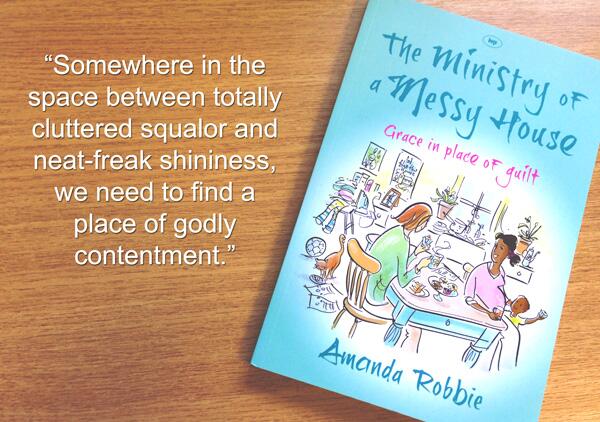
  • A couple of people have posted reviews of The Ministry of a Messy House over the weekend: Rachel found it encouraging and Gary‘s favourite story was the one about the communion bread (I think this is everyone’s favourite). Martha hasn’t posted a review, but an interview with me about the book.
  • My kitchen is very chilly. So much so that I’m even going to do some ironing and hope the heat from the steam will defrost my fingers.
Read Full Post »

It’s not all cake in the Vicarage. There’s bread too. Last week I made my first couple of loaves of sourdough.

I’ve been making my own bread on and off ever since we lived in Singapore and the only bread to buy was either ridiculously sweet chewy sliced rubber stuff or tastier but eyewateringly expensive. I started with a bread machine that broke from overuse and since then I’ve generally used my Kenwood mixer to make the dough. I very often make dough for pizza at home or for breadsticks for our weekly Cake and Chat community coffee morning. Although, after watching The Great British Bakeoff the other week, I think I may be making the sticks all wrong – they’re doughy rather than snappy. Still tasty though. I hardly ever make a proper loaf.

I’ve been thinking about sourdough for a while. It’s the bread of geeks, as you’ll see if you google it, made without any added yeast but a starter made from flour and water which is left to brew its natural yeasts. And then I was reading the side of my flour bag (I suffer from acute narrative hunger and need to read everything – one reason why the internet is so bad for me) and there it was – a sourdough starter recipe. So I consulted Annalise Barbieri’s lovely blog because I knew she made sourdough and also some recipes I found online. And then I gave it a go.

The flour and water concoction magically became my starter over the course of a week and a very sticky dough became my first loaf.  Although it spread out rather alarmingly, it came out of the oven with a lovely crust and proper airy texture. The second loaf was less airy but less spread too. I’m finding it a fun way to make bread, especially since the recipe I’m using doesn’t involve much kneading, just a brief punch a few times over the course of a morning. It also keeps really well, although there’s not much been kept. Sourdough has a low GI and is easier to digest than bread made with added yeast. And a loaf cost less than 50p to make. Brilliant.

A couple of days after starting my starter, I discovered that it’s Sourdough September. So I seem to have timed it quite well. Anyway, I’ve just pulled a new loaf out of the oven and I’m going to call a friend now and invite her over for coffee and a slice of bread.

This slideshow requires JavaScript.

Read Full Post »

This recipe is the favourite of Surfer, who is Godfather to the Joker. I used to make it when he came to pray with the Vicar back in the relaxed days of theological college. It’s loosely based on minestrone, but without the pasta. Pasta is a pain in soup cos it goes revoltingly soggy if you have leftovers, or want to freeze it. So this has beans instead and is easily made from things I normally have in the fridge and pantry.

Ingredients

  • 4 rashers bacon, finely chopped, or small pack lardons
  • Medium onion, diced
  • 2 sticks celery, diced
  • 3 carrots, diced
  • 1 leek, quartered lengthwise and then finely sliced
  • Tin of beans – haricot, borlotti or canellini
  • Tin of chopped tomatoes or jar/tetrapak of passata (sieved tomatoes)
  • Olive (or other) oil, mixed herbs

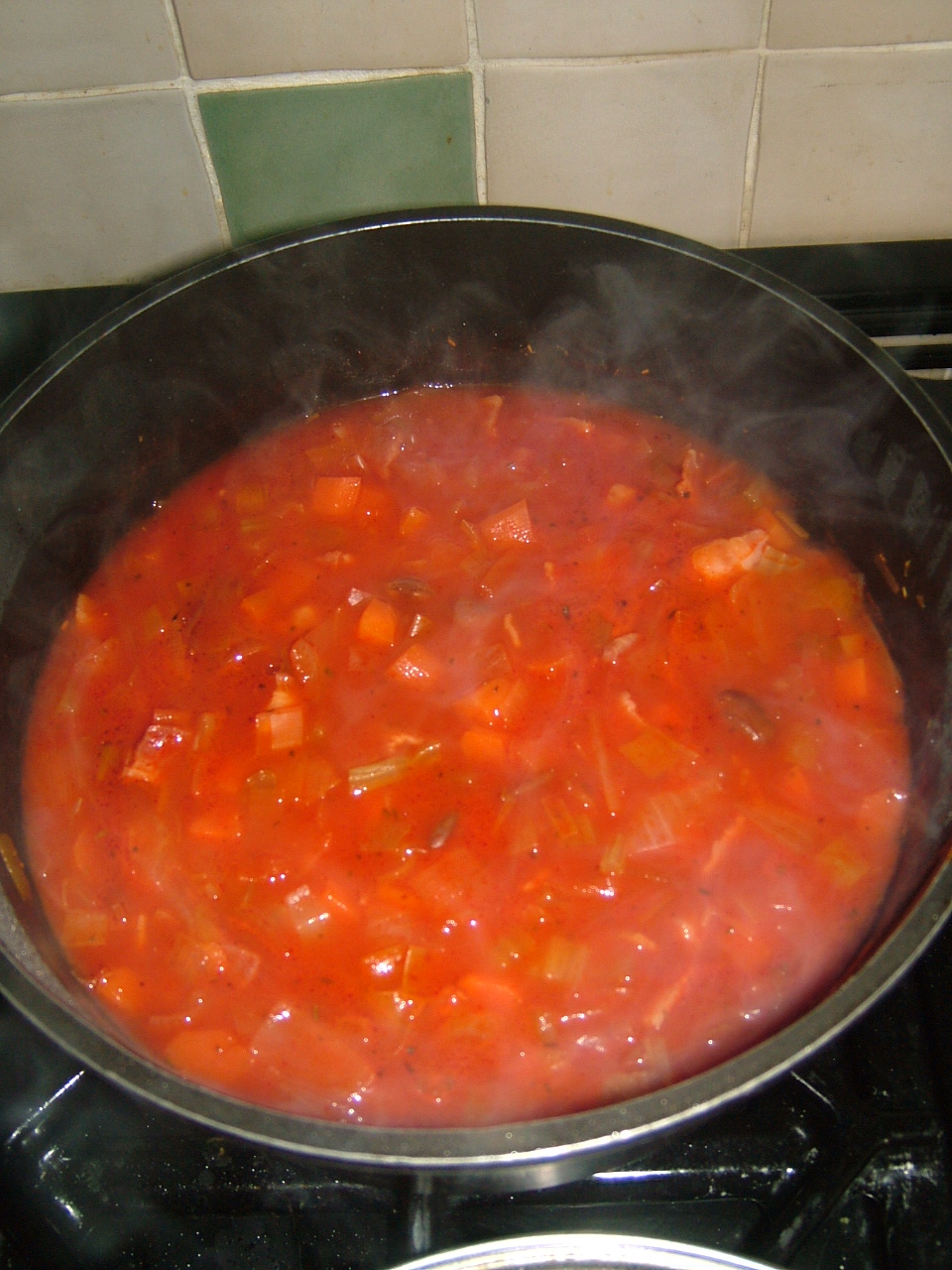
Fry your onion in a little olive oil and then add the bacon and cook until the fat begins to crisp. Then add other veggies, fry a little and add tomatoes and tinful of water or more to dilute to a soupy consistency.

Bring it to the boil and simmer for 10-15mins until the vegetables are tender. Rinse the beans and add to the soup, along with a smattering of mixed herbs or just oregano. Heat through and serve with crusty bread. This is good for May lunches, given the temperatures this year!

Read Full Post »

Fridge cake aka tiffin is a very useful no-bake Vicarage staple. It uses store cupboard ingredients and can be made quickly, although it needs a few hours to set in your fridge – if you’re overeager to consume it, it can be rather too crumbly and sticky.

Ingredients

  • 400g digestive biscuits (I use the cheapo range), broken into crumbs – in a plastic bag using a rolling pin, or in a food processor
  • 200g butter (hard marg would work too but not soft)
  • 4 heaped tbspns cocoa powder
  • 3 tbspns golden syrup
  • 3 tbspns brown sugar
  • 4 handfuls sultanas/raisins/cranberries or other dried fruit as you like (approx 100-150g in total weight)
  • 200-400g white chocolate, melted

Place the butter, cocoa powder, golden syrup, sugar and dried fruit in a large microwaveable bowl with lid and heat on full power for 2-3 minutes. If you don’t have a microwave, you can do this over a low heat in a saucepan. Once the butter has melted and the sugar has dissolved, add the crushed biscuits and mix thoroughly.

Place the mixture in a small roasting tin (about 20cmx30cm) that has been lined with cling film and level it out into the corners. Cling film is the best way to avoid sticking AND excessive washing up. Place the tin in the fridge whilst you melt the chocolate topping.

I usually use 200g white chocolate for the topping for this, but it is a little skimpy – 400g would give you a really good layer on top. I melt the chocolate in a jug on defrost in the microwave, but also sometimes use the old method of a bowl on top of a pan of boiling water. Usually when the last lot of chocolate was burnt in the microwave, alas. Using a knife, spread the chocolate over the now slightly cooled base and then refrigerate the lot for a couple of hours – preferably overnight. Use a sharp knife to cut it into pieces to serve with strong coffee.

Read Full Post »

This recipe is a Vicarage favourite that crosses the seasons – it’s hearty enough for winter, but the light sauce means that it suits a chilly day in June aswell. It’s also speedy, cooking in about 20 minutes. So if you can pre-prepare most of the veg, you can get it on the table within half an hour of getting in from work, or the swimming lesson or whatever. It was swimming for us yesterday – and the Queen and the Joker had to get to Kids Club, fed, in less than an hour after our return.

Ingredients

  • Pork steaks (I chopped the ones I had in half and so fed six of us, with seconds, from a pack of four) or chops
  • Bacon, about 4 rashers, chopped
  • Large onion, roughly chopped
  • Potatoes and vegetables – select from carrots, squash, sweet potatoes, parsnips, leeks – all chunked. I use a smallish potato per person plus a couple of each of about 4 other vegetables to feed six of us.
  • Cabbage, sliced – I used about half a Savoy
  • 2-3 bay leaves
  • 1 tbspn vegetable (or chicken) bouillion powder or a stock cube
  • 200ml cider

Using a large pan or cast iron casserole dish, fry the pork in butter to brown and then set aside. Then add the bacon and fry until a little crispy. Then fry the onion until soft and add the vegetables and fry them a little too. Then add cider and enough water to almost cover the veg. Add your bouillion powder and bay leaves and bring the liquid to the boil, then turn it down to a simmer. Pop the pork steaks back on top, cover the pan and set your pinger to 15 mins. After 15 minutes, pop in the shredded cabbage and leave for another 5 minutes or so, until the vegetables are all tender. Serve in soup plates if you can, with spoons handy to slurp up the lovely broth or chunky bread to mop it up if you’re very hungry.

If you’re lucky, there may be some leftover veg to have with hunks of bread for lunch tomorrow…

Read Full Post »

Here’s my take on Anzac biscuits – a fast and fabulous recipe which produces a great mound of tasty coconut and oat treats. I can produce about 40 in a single batch and they are extremely popular with all ages. They are also egg-free, so good for vegans or Asian vegetarians.

Ingredients

  • 3oz/75g porridge oats
  • 3oz/75g desiccated coconut
  • 4oz/100g plain flour
  • 4oz/100g sugar
  • 40z/100g butter or marg (soft is fine)
  • 1tbspn golden syrup
  • 1tspn bicarbonate of soda, dissolved in 2 tbspn hot water

Mix the dry ingredients in a large bowl. Meanwhile, melt the marg and golden syrup in a jug in the microwave, or a pan on the stove if you prefer. Add the bicarb to the hot water in a small cup or dish and then stir the fizzy mix into the warm marg/syrup combo. Then add the warm wet ingredients to the dry ones and stir in carefully.

For smallish Hobnob size biscuits use teaspoons of mixture – I can fit 16 on a standard baking sheet (covered with silicone lining), leaving room for spreading. Bake at about 180ºC (Gas Mark 4) for 8-12 minutes until the biscuits are golden all over and most have flattened out after rising. Transfer to a rack for cooling after they’ve had a few minutes to firm up.

The gallery below shows some slightly larger ones made using dessertspoonfuls of the mixture which gives you about 24 biscuits from a single batch.

This slideshow requires JavaScript.

Read Full Post »

One of the things I love about my Vicarage cooker (my treat when we moved here) is its small slow oven. The slow oven is a bit titchy – only big enough for one large pot or only a single baking sheet of meringues, but I am using it more and more for winter casseroles. Tonight I cooked sausage casserole – one of our top favourites which has a few variations but is always very popular with the kids (and grown ups too).

I make this using Sainsbury’s Taste the Difference chipolatas. I’d recommend using good quality ones as cheap ones can come out rather spongey. And you only need to use a single packet to feed a family and can get that for about £2 if there’s an offer on.

The Vicar's dinner

Ingredients

  • 1-2 onions, finely sliced
  • Pack of sausages
  • 2 cups (500ml) lentilles vertes or green lentils
  • Bay leaves, mixed herbs
  • Red wine (about a glassful) and stock
  • Optional – tin of tomatoes, chunked carrots

Brown the sausages in your casserole dish and then remove them to a plate or bowl whilst you pop in a little oil or butter and the onions. Leave the onions to get nice and soft then return the sausages, chopped up into bite sized chunks, to the pan. Tonight I chopped the sausages with a spatula before I removed them and fried the onions, otherwise you can slice them with a knife once removed – I recommend pinning them to the chopping board with a fork rather than fingers (I speak from experience of burnt fingers and escaping sausages).

To the onions and sausages add the lentils, bay leaves and herbs and wine and stock (I use hot water and vegetable stock powder). This evening’s casserole also included a tin of chopped tomatoes. The liquid needs to be added to a generous level above the lentils and sausages – say 5cm/2″ in your pan. This gives space for the lentils to swell and liquid to evaporate.

 Bring to the boil and then simmer for at least 1/2hr on the hob, or pop in a slow oven at about 140ºC (Gas Mark 1) for a couple of hours or more. The slow cooking method has the advantage of keeping the Vicarage kitchen warm, so this is obviously my preferred option.

I tend to check the casserole every hour or so if it’s in the oven, just to make sure that there is still enough liquid. If you’re adding carrots it’s best to do so about half an hour before the end of the cooking time, otherwise they can get a bit soggy. Add salt and pepper to taste before serving and add a little extra liquid if needed to ensure a bit of sauce to soak into the essential accompaniment of mash.

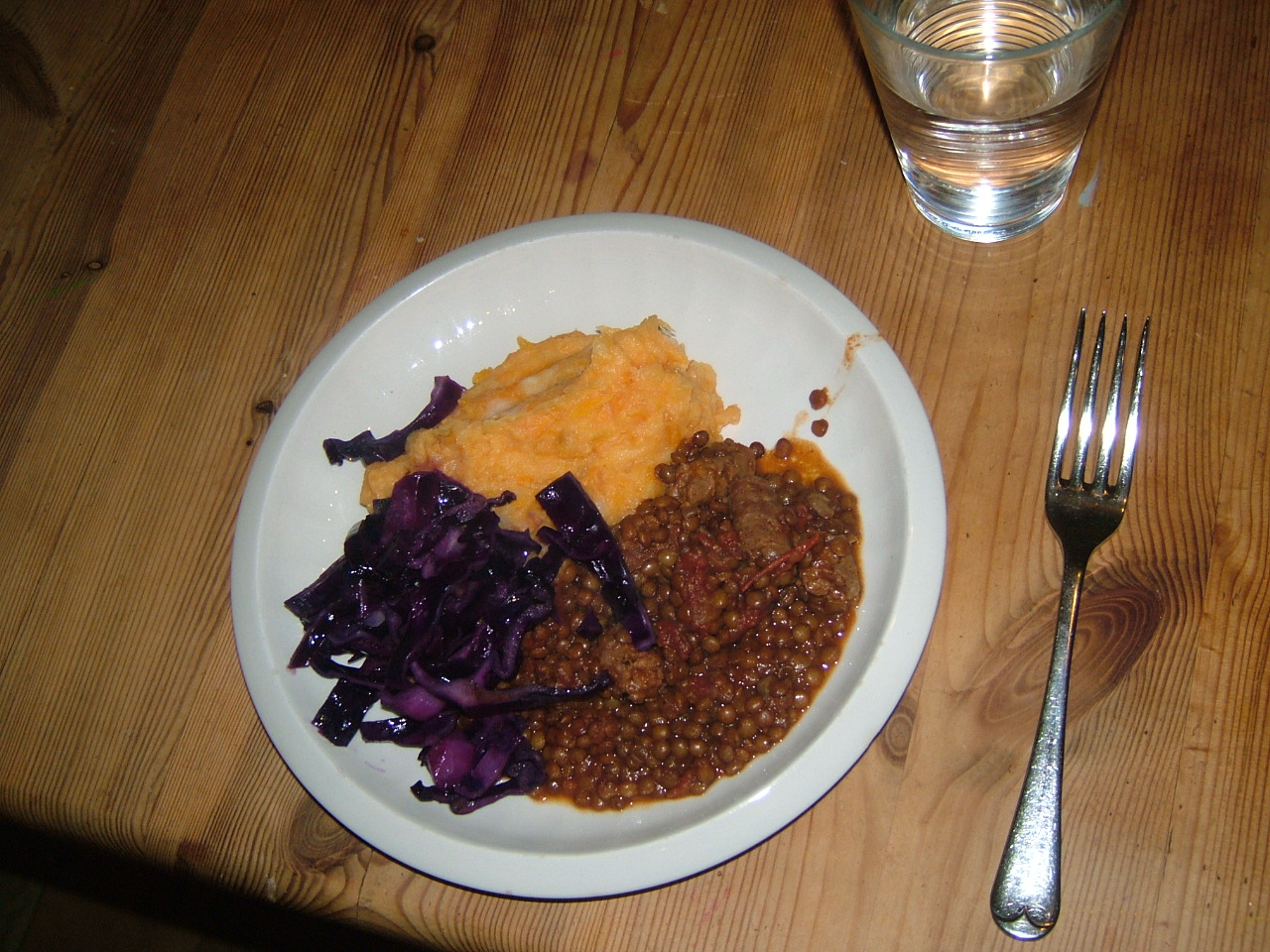
As you can see, I served the casserole with mashed sweet and normal potatoes, and some braised red cabbage. This is a great winter warmer and excellent value for money. We had leftovers that will do well with a bit of chunky bread for lunches whilst the kids are at shcool.

Read Full Post »

This recipe is cheeky because it involves minimal scone faffing ie rolling and cutting. And it’s cheekily zingy with strong cheese and a dose of spice. It’s also cheeky because it’s not that square, but I liked the alliteration for the title.

Ingredients

  • 1lb/450g self-raising flour
  • 2tspns baking powder
  • 1tspn salt
  • 1tspn smoked paprika (or paprika, or 1/2tspn chilli powder)
  • 4oz/100g butter
  • 7oz/200g grated cheddar (preferably mature) or other strong hard cheese
  • 2 eggs
  • Milk

Place flour, baking powder, salt and paprika in a mixing bowl. Add chopped butter and rub in until butter chunks are the size of smallish gravel. Stir in grated cheddar. Break eggs into a measuring jug and whisk, then add milk to make up 10floz/300ml of liquid. Add to the flour and stir in to make a soft dough.

Place dough in lined or greased small roasting tin (around 12″x9″/30cmx23cm). I just press it in lightly and it doesn’t always become a perfect rectangle and is often square-ish (hence the recipe title). Cook in a preheated oven at 230ºC (Gas 8, Fan 220ºC) for 15-20mins until the scone is golden, well risen and no longer doughy. It sometimes looks a little crisp on top but that’s fine. Turn out to cool on a wire rack then cut off squares or rectangles to eat as you like.

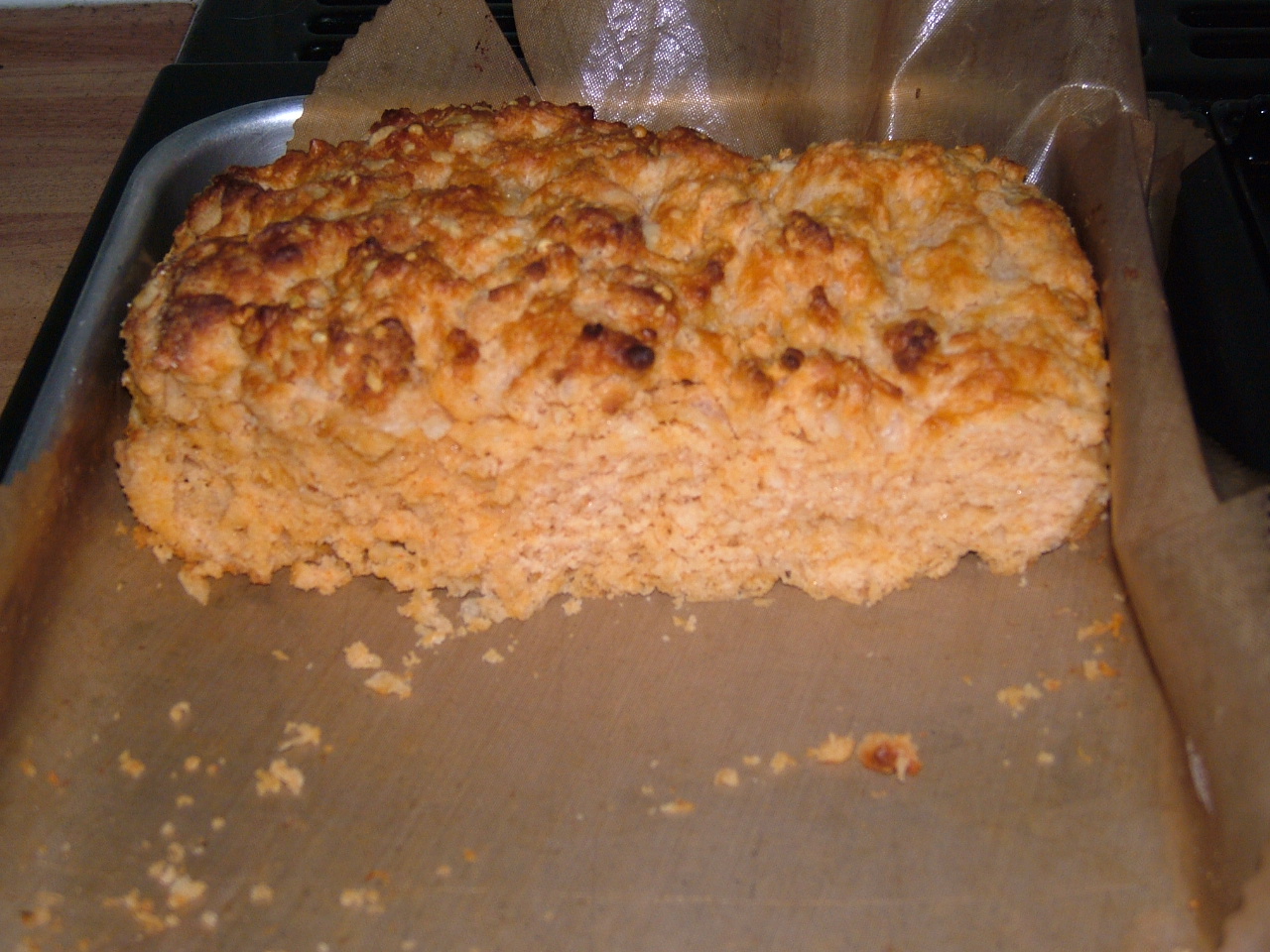
Didn't manage to get a pic of this before most was consumed!

This scone is fabulous on its own as a snack, but is also delicious served with soup or cold meats. It keeps 4-5 days in an air tight tin and is also very good toasted (which is how we ate up the remainder yesterday). It’s extremely fast to make so is a very useful recipe to have up your sleeve if you have only half an hour’s notice before lunch guests show up.

Read Full Post »

I found an impressive mushroom on our lawn yesterday and was wondering about eating it. I was under the misapprehension that there were only a few types of poisonous ones and it was likely to be fine.

Then I went googling and searching around the internet and it’s a lot more difficult than I thought it would be. So we’ve not eaten it – it’s sitting in my kitchen but I think it will just be going in the compost. I think I’m best to stick to the radishes and salad leaves I planted myself.

Bit of a pity, but best not to poison the family, eh?

Read Full Post »

Last week I had to bake for Cake & Chat and wanted something a little different. I also had a packet of rhubarb that I’d picked up on the reduced section at our local Morrison’s. And so here is a recipe for rhubarb pudding cake (I found the original online at a National Trust historic cakes site).

It went wonderfully with creme fraiche on Thursday and with cream on Sunday. I had to bake a second one this weekend as the first one had disappeared before lunch on Thursday. The leftovers are in the fridge tempting me now.

The recipe involves three separate sections – a cake batter, chopped and sugared rhubarb and a crumble topping. Althought it’s slightly faffier than a bog standard sponge, it’s worth the extra trouble for a delicious dessert cake. The one in the pictures has some gooseberries in it aswell as I didn’t have quite enough rhubarb second time round – they worked very well.

Ingredients

  • 1lb rhubarb (or gooseberries, or mix of both), chopped into 1″ pieces and sprinkled with 1-2tbspns brown sugar

Crumble topping

  • 2oz butter
  • 3oz plain flour
  • 1oz caster sugar

Cake batter

  • 3oz soft marg or butter
  • 3oz caster sugar
  • 2 eggs
  • 3oz self raising flour
  • 1 tbspn milk

Firstly, prepare the rhubarb, chopping it into chunks, or top and tail your gooseberries. Place it in a bowl and sprinkle the brown sugar over the fruit and set aside. Then make the crumble topping, chopping the butter into the flour and rubbing it into small crumbs with your fingers. Then stir in the sugar and set aside. Finally, in another bowl, cream together the butter and the sugar, beat in the eggs and fold in the flour. I do this using an electric hand mixer – there’s not enough mix for my freestanding mixer. Add enough milk to give a dropping consistency – if you’re using large eggs you might not even need the milk.

You’ll need an 8″ cake tin, lined with baking paper (or a reusable liner). Then you layer the cake up – first the batter, then the fruit (with another sprinkling of brown sugar) and finally the crumble topping mix. Bake at 190ºC (Gas 5, Fan 180ºC) for 40-45 minutes until the cake feels firm on top.

This cake is delicious hot or cold and best served with some sort of cream. It would be good with custard too.

Read Full Post »

« Newer Posts - Older Posts »