Feeds:
Posts
Comments

Archive for the ‘Food’ Category

Well, a small one, anyway. Last year we bought some very cheap strawberry plants and stuck them in a flower bed where they failed to produce anything edible. This year, however, they have given us some sweet strawberries – a whole (small) bowlful. And we’ve been able to pick them at peak ripeness. Delicious. Please excuse the shocking lack of focus in the picture. The one I took using the flash made the strawberries look purple.

We also have some small and very sour cherries, about five radishes, a handful of gooseberries, some spindly rhubarb and some snail-chewed bok choi. And there will definitely be potatoes. It’s better than last year, and if our gardening continues to improve at this rate I reckon that we might have a good harvest by the time the Engineer leaves home (he’s six btw).

Read Full Post »

The Vicar and I were married at St Andrew the Great in Cambridge. I’d been a member of the church for about eight years when we wed. The year before that the congregation had moved from the Round Church, a beautiful Norman building which had become far too small for the church to meet in. The move cost the church (as I recall) £1.8 million, as the new (to us) building needed extensive refurbishment, having been redundant for 25 years. The congregation gave generously, but there were a few more traditional fundraising efforts. One of these was a Round Church cookbook.

A recipe from the cookbook that I still use regularly is Rosemary Sennit’s malt loaf. It’s great for batch baking – I normally make three loaves at once and quick to put together. It’s egg free and therefore suitable for Asian Vegetarians & Vegans.  It’s low fat aswell and I now prefer it to the Soreen option – it’s less strong and squidgy, but still delicious with butter. All brilliant reasons to use this simple and tasty recipe.

Ingredients

  • 12oz self raising flour (1lb 8oz for double batch – you can double all the other ingredients easily yourself!)
  • 1/2 tspn salt
  • 2oz sugar
  • 4oz raisins/sultanas or mix of them
  • 2 tbspn malt extract (buy it in a health food shop eg Holland and Barrett)
  • 1 tbspn black treacle
  • 1/2 pt milk

Put the flour and salt in a bowl, adding the sugar and dried fruit and mixing together. Put the malt, treacle and milk into microwave jug. I heat it for 1-2 minutes on maximum heat and then mix it together. You can also do this in a pan over a low heat on the stove. Then pour the liquid into the dry ingredients & mix thoroughly. Pour everything into a well buttered 3lb loaf tin, or one lined with a reusable liner. Or if you double the batch you can make three smaller loaves in 2lb tins – this is what I normally do. Don’t use a paper liner as these will stick (I speak from traumatic experience).

Bake at 180ºC (Gas 4, Fan 170ºC) for 40-45mins or so until firm to touch, and a skewer comes out clean. I’ve found that the cooking time is about the same for both sizes of loaf. The original recipe said to cook a single quantity in a 2lb loaf tin in 75mins, so if you only have that tin size your deeper loaf will take longer – you might want to cover up towards the end of cooking to prevent the dried fruit from burning, though. Turn out and cool on a rack, or you can leave to cool in the tin. Slice and eat with butter (or low fat marg for the health conscious).

Read Full Post »

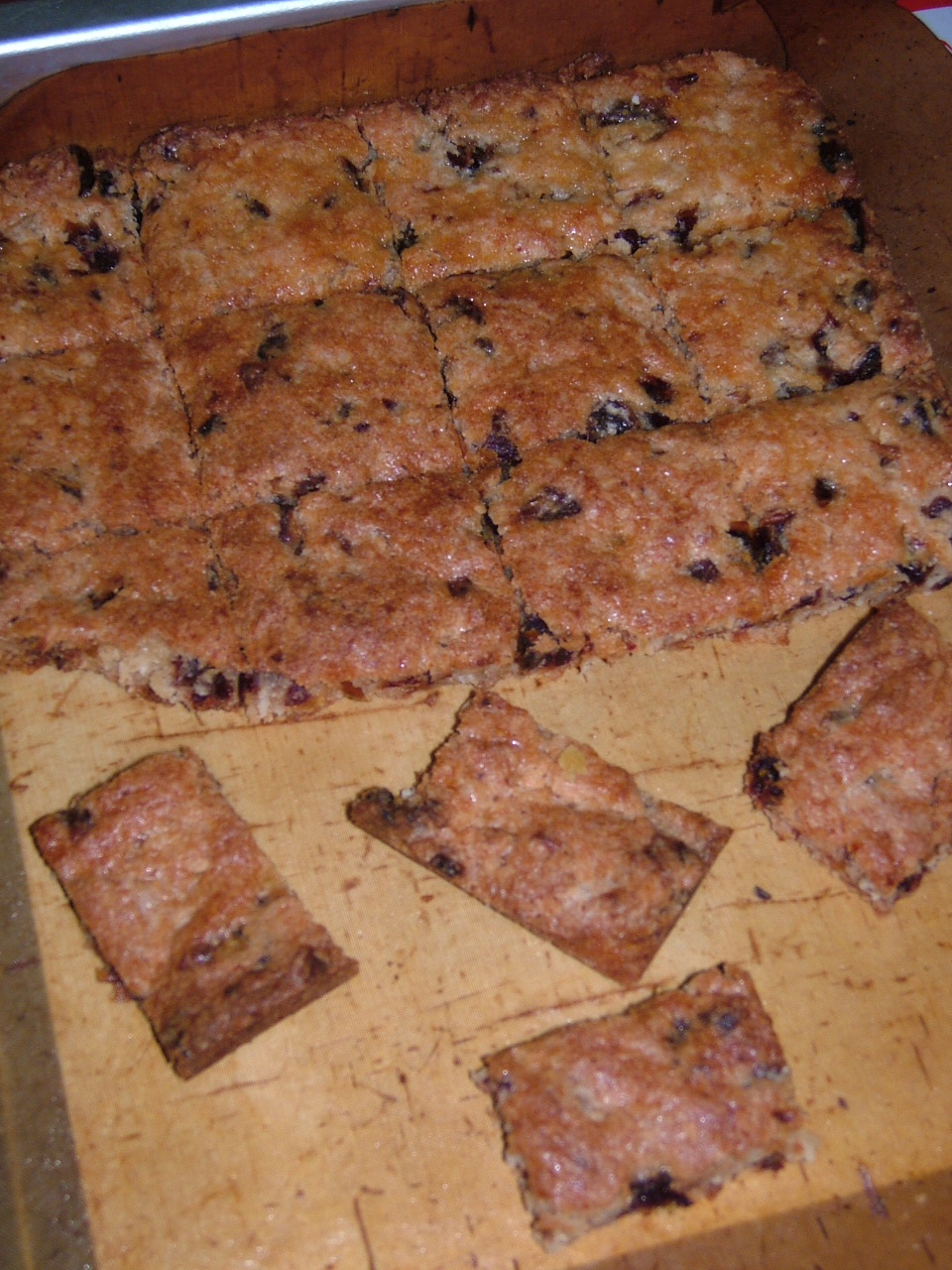
This is a brilliantly quick and easy cookie recipe given to me by Mrs Rev Ted, whose husband was the Vicar’s boss when he did his curacy. So she was my training incumbent, and this recipe was an essential part of my vicar’s wife training. It’s speedy, just like Failsafe Flapjack and is also flexible so you can fill them with whatever you have to hand – chocolate chips, raisins, cranberries etc.

Ingredients

  • 3oz butter or margarine (soft is fine)
  • 3oz soft brown sugar (or caster sugar if you don’t have brown)
  • 3oz demerera sugar (or granulated)
  • 1/2 tspn vanilla extract
  • 1 egg
  • 6oz self raising flour (or 5oz self raising flour, 1oz cocoa, 1/4 tspn baking powder)
  • 4oz chocolate chips, raisins, cranberries, or whatever you fancy

Cream the butter and sugars, then beat in the vanilla extract and egg. Finally add the flour (or flour, cocoa powder and baking powder for chocolate cookies) and your chocolate chips or raisins.

To bake them I line 3 baking trays with reusable silicone liners (you can use baking paper or grease your trays well) and use two teaspoons to make walnut-sized blobs of mixture. I can make about 40 standard biscuit-sized cookies from a single batch of this mixture. Bake them for 12-15 minutes at 180ºC (Gas 4, Fan 170ºC), until they have turned golden (you can only see this when they don’t have cocoa in them!) and have risen. They will flatten out again and harden a little whilst cooling – wait a few moments before transferring to cooling racks with a palette knife. If you slightly undercook them you can get a chewy cookie texture, or leave a little longer for a crunchier bite.

Options I have tried successfully for these cookies include double choc chip (cocoa in the mix with white choc chips) and cranberry and choc chip with a plain mix.

Double Choc Chip Can Do Cookies

Read Full Post »

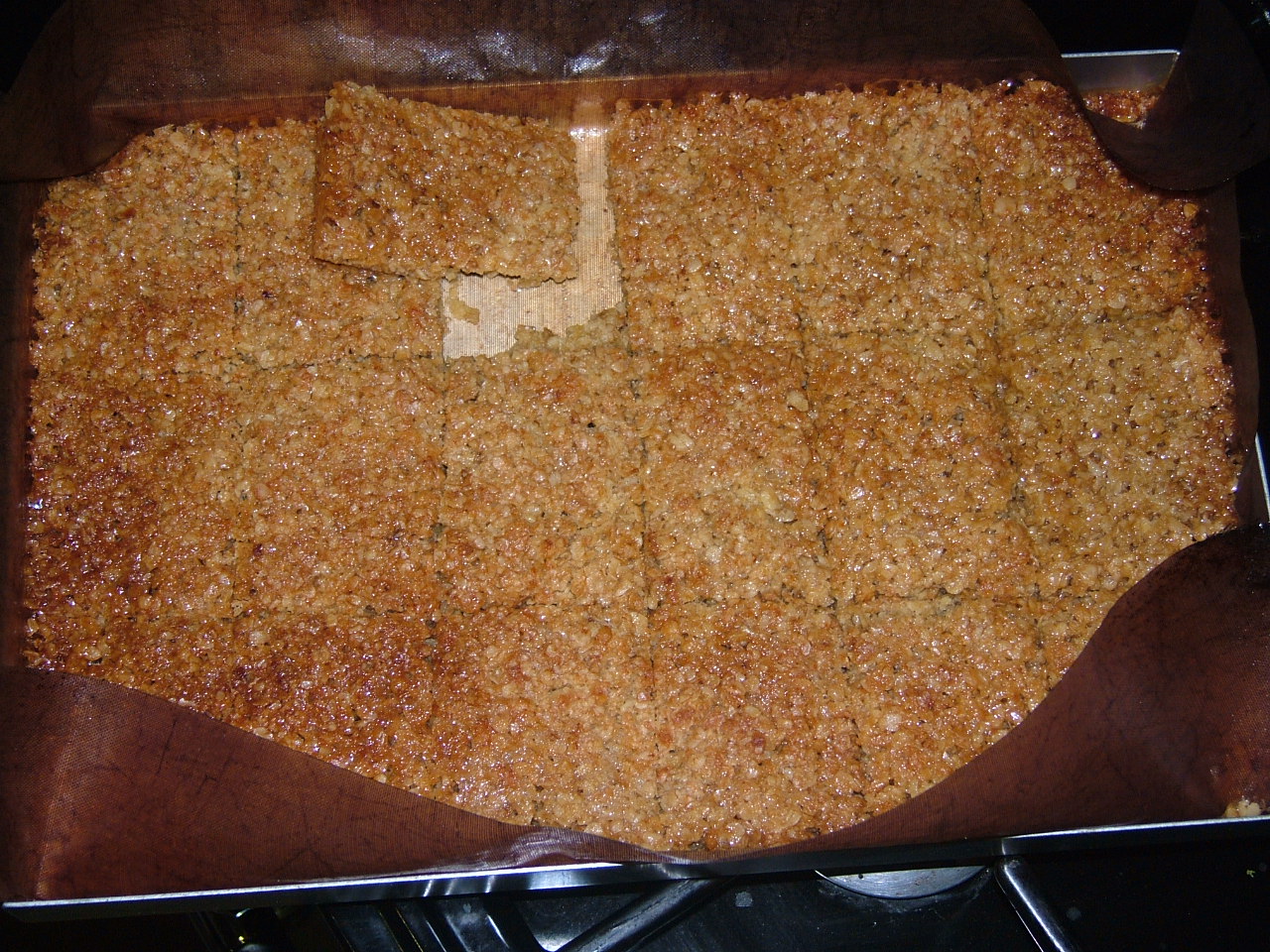
I can start with 4 ingredients in the cupboard and have 2 trays of flapjacks ready and out of the oven in less than half an hour. This is a delicious flapjack recipe – my absolute favourite, with a chewy texture and a delicious caramel taste. It’s my go-to recipe for home-made treats in a hurry. I was originally given the recipe by another ordinand’s wife when the Vicar was training for ministry and I must have baked these flapjacks at least 100 times since then without a bad batch. I usually make a double batch as it only takes a couple of minutes more than a single batch and there never seems to be any trouble in disposing of them.

Ingredients

  • 150g granulated sugar
  • 150g soft margarine
  • 4 tbspns golden syrup
  • 250g porridge oats

Melt the sugar, margarine and golden syrup together in a large microwave bowl (or in a saucepan on the stove if you don’t have a microwave) – it takes about 2 minutes on full power in my cheapo 750W microwave. To get the golden syrup out of my measuring spoon easily I dip the spoon (a metal one) in a mug of just boiled water before adding each spoonful. Once the sugar, marg and syrup have melted together, mix in the oats. Then pop the mix in a 8″x12″ baking tin, lined with silicone baking paper (or a reusable liner like I use), and flatten it down so that it’s evenly distributed and pop it in the oven.

Your oven needs to be pre-heated to 180ºC (Gas 4, Fan 170ºC). In my fan oven, the flapjack takes 15 minutes to cook, but can take 20-30mins if your oven isn’t as speedy or isn’t quite up to temperature at the beginning. Once it’s golden on top, remove from the oven and leave in the tin for five minutes before cutting into slices sized to your flapjack appetite (generally 21-24 in my experience) and leaving to cool fully in the tin. If you cook it a little longer, it’ll be crunchy rather than chewy, so you can cook differently according to your flapjack preference.

Read Full Post »

Someone asked me recently for a low-fat traybake. Most of my cooking isn’t terribly healthy – I prefer to have a small slice of something delicious rather than a large wedge of something worthy. However, sometimes deliciousness and worthiness can combine, as is the case with these fantastic Date and Coconut Chews.

I was given this recipe by my friend Summer after we spent a very happy day off on a walk with her and her Vicar husband. We took a picnic lunch with us. I brought soup and Summer brought various treats including these. I’m not normally a fan of dates, but these slices are wonderful – chewy and sweet but full of fruit and coconut, which I think cancels out the butter and golden syrup.

Ingredients

  • 6oz/170g plain flour
  • 3 oz/85g dessicated coconut
  • 6oz/170g stoned dates, chopped
  • 6oz/170g caster sugar
  • 3oz/85g butter (you could use hard marg, but butter is tastier, isn’t it?)
  • 2 teaspoonfuls (1 dessertspoonful) golden syrup
  • 1 egg, beaten

Melt the butter, sugar and golden syrup (I always do this in the microwave, but you can do it on the stove aswell). Stir the dry ingredients together then add the hot butter mixture and the egg. Mix everything well and then spread out in a lined 9″x11″ (23cmx28cm) tin. Bake for 15-20 minutes at 180ºC (Gas 4, Fan 170ºC).

When cooled a little, cut into 24 slices. I did a little maths and reckon that each slice has about 3.5g of fat. This isn’t quite low enough to classify as ‘Low Fat’ in the US , but I think it’ll do.

[Late Edit: A Twitter pal tells me he’s tried this recipe using prunes instead of dates and rice flour in the place of plain and that it worked really well. Good for those on a gluten-free diet then.]

Read Full Post »

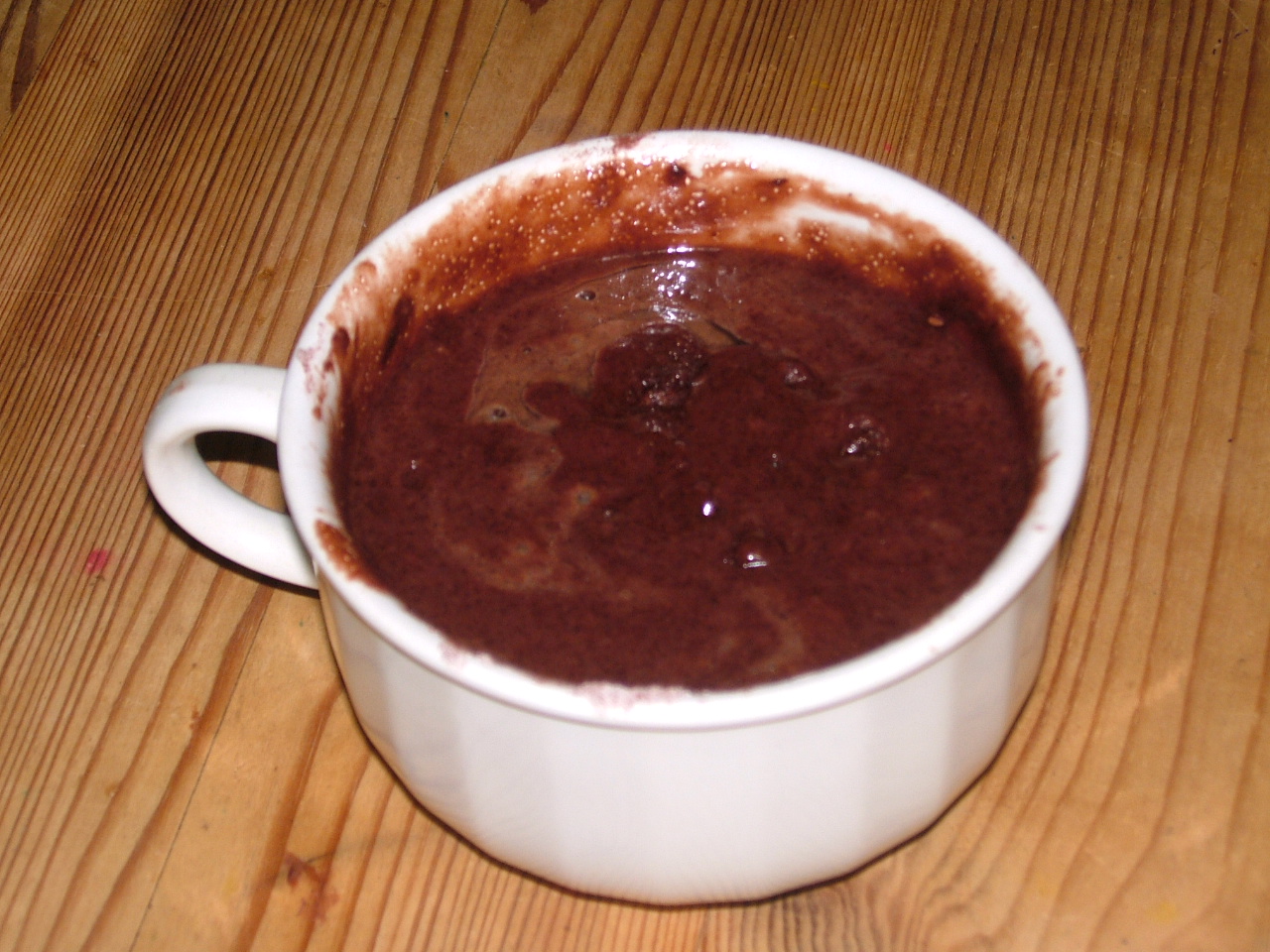
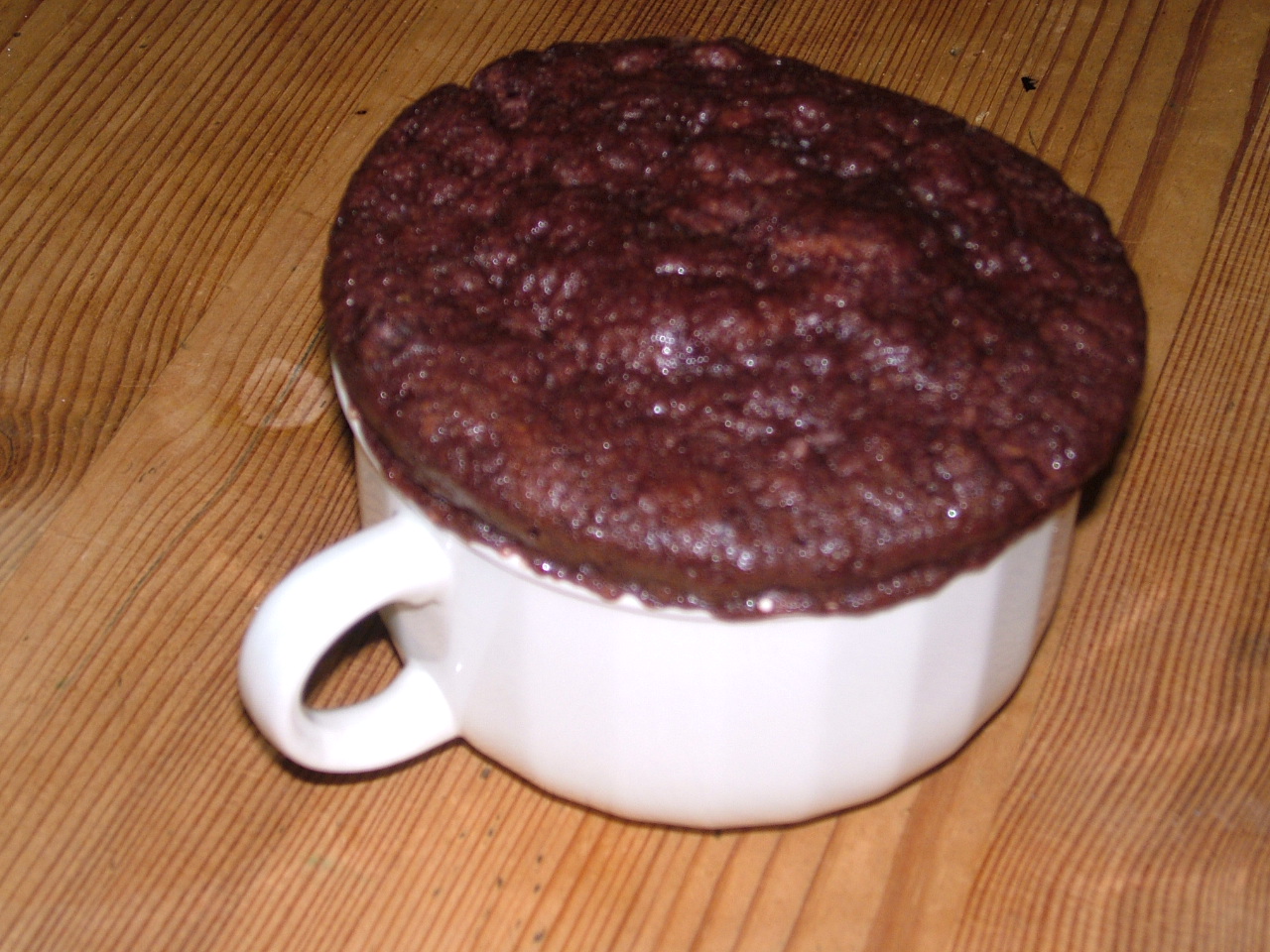
This week we had a quiet Sunday lunch at the Vicarage – it was just our family: Rocky had an invitation to lunch out and I’d been disorganised about having folk over. So for pudding I decided to trial a recipe I saw on 22 Words a while back. It’s a chocolate sponge speedily cooked in a  microwave in a mug.

It was a great success with the Vicarage crowd, and two portions served four of us generously (the Engineer was not in a puddingy mood). It would be lovely served with vanilla ice-cream, which was lacking in our freezer so we ate it with lashings of double cream (a half pint between us – eek!).

The recipe was originally titled ‘3 minute brownies’ but what you get is more like a hot sponge pudding. Although it takes about 3 minutes in the microwave, total production time was rather longer – a whopping ten minutes for two of them, I reckon. A perfect pause time between courses, actually.

Ingredients

  • 4 tablespoons self-raising flour
  • 4 tablespoons granulated sugar
  • 2 tablespoons cocoa powder
  • 1 egg
  • 3 tablespoons milk
  • 3 tablespoons oil

First, mix the dry ingredients (flour, sugar, cocoa) in your mug. My mug (more an enormous cup, actually) had a capacity of 300ml, and I think this is about the minimum you need. Then break in the egg and add the oil and milk. Mix all together until you have a smooth batter.

Pop it in the microwave on high heat for 3-4 minutes. Mine took 3 1/2 minutes in our 800W basic Matsui machine. The sponge feels pretty wet, but is firm to the touch when cooked. Spoon into a bowl and enjoy with cream or ice-cream.

Next time I might mix up the batter in a jug for ease of stirring (although this would add to the washing up, always an important consideration I feel). And I’d quite like to try experimenting with making a lemon version. I’ll report back on that one. In the meantime, why not try it for pudding this evening?

Read Full Post »

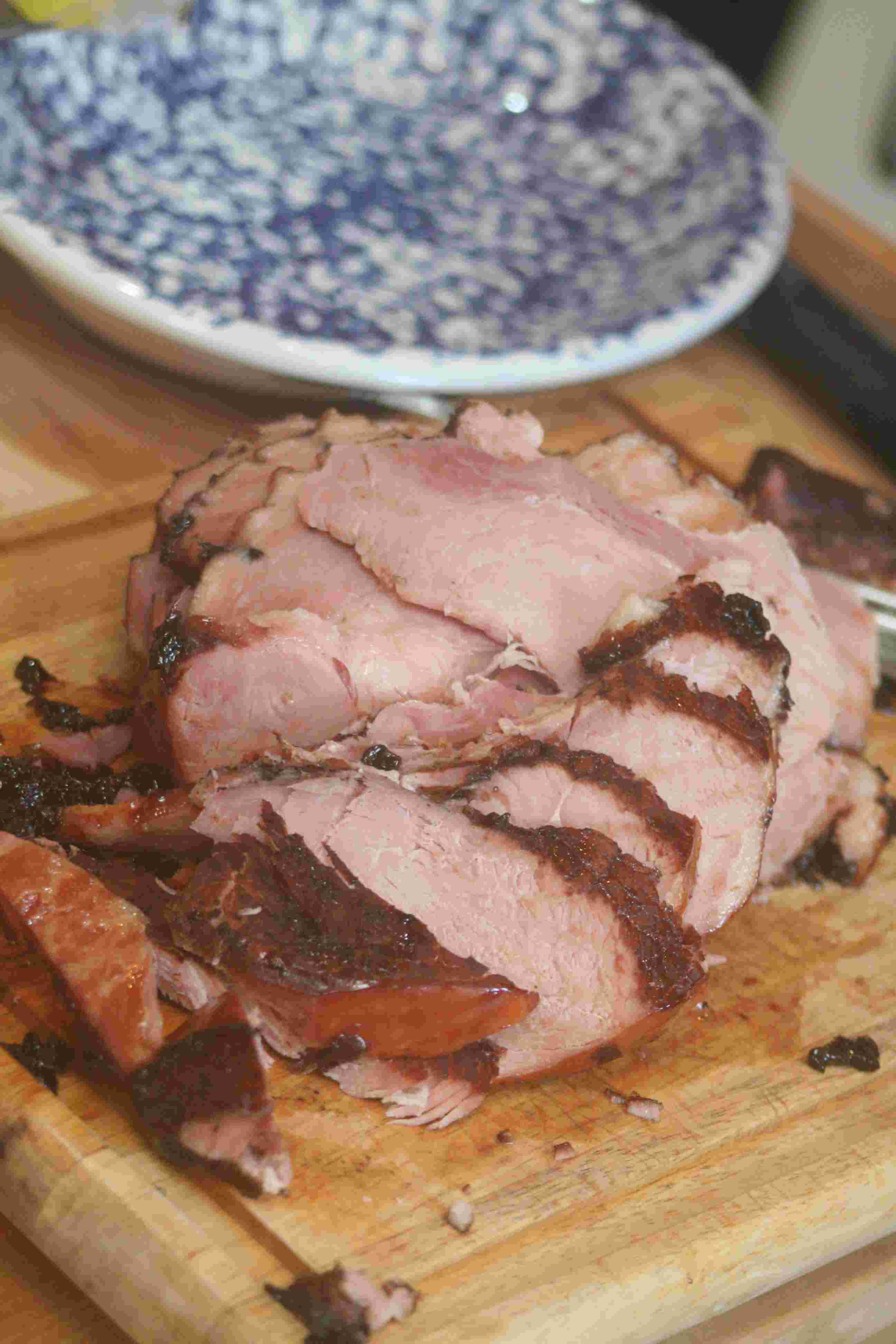
As I munched on yummy leftovers for lunch today, I thought it was time to blog my roast gammon recipe. Although it’s not all roasted – mostly it’s boiled, which ensures that it’s moist, whilst the roasting (with a glaze) sets in  a little crisp sweetness. Gammon is an excellent Sunday lunch joint – no waste and wonderful leftovers. And last week, in our local Tescos 2.7kg joints were going for £6! So we had one yesterday and another is in the freezer. The great advantage with gammon is that because it’s great with mashed potatoes, rather than roasted, you can have it mainly cooked before church and eat Sunday lunch at lunchtime rather than midafternoon, as tends to happen with anything involving roasties.

So this recipe is specially adapted for Vicarage dwellers, or anyone wanting to go to church on a Sunday and come back and eat within an hour or so of returning.

Cherry coke and jam ham

A great and speedy Sunday lunch - cherry coke and jam ham

Ingredients

  • Gammon joint
  • Cherry coke/coke/cranberry juice/apple juice/cider/spiced cranapple to fill pan over the meat (if there’s not quite enough top up with water) but for a 2.2kg joint I normally find 2l is enough
  • Cloves
  • Cherry jam/treacle/mustard and brown sugar

I usually rinse the joint in cold water – there’s never enough time to soak it or boil it up from cold, I find. Although lately I’ve not even bothered with this rinse. Then I simmer it for 30mins per 500g  in something tasty – cherry coke, ordinary coke, cranberry or apple juice, cider or (an excellent discovery tried this Christmas) leftover Spiced cranapple from the carol service. I usually pop an onion in alongside the joint too. Usually on a joint they tell you to cook it for 35mins per 500g plus another 35mins, but since I’m leaving the joint in warm juice during the service, I ignore their instructions.

Then when I get back from church I whack the oven up to 200C (Gas 6) and whilst it’s heating up I put the tatties on and fish the joint out and put it straight onto a roasting dish which I’ve lined with foil. Then I remove the funny plastic holder thing and carve off the top layer from the fatty skin part. I use the knife to make a diamond pattern and stud the criss-cross of each diamond with a clove. Then I cover the clovey fat with a sweet sticky topping. This might be (easiest and peasiest) black cherry jam boiled up a bit to make it stickier, or maybe some black treacle, or some brown sugar and mustard. My top tip for this is to have everything you need to hand before you start – teaspoons, cloves, mustard, sugar or whatever. It’s sticky and it’s better to get it over with quickly.

Then I pop the ham in the oven for only 15-30 minutes. Any longer and the sugary topping begins to burn and weld to the bottom of your roasting dish. So set the pinger to 15mins and check it. I consider it done when the sweet topping is caramelised but before the bottom of the pan is completely scorched.

This is why a foil lining to the dish is a good idea. I just wish I remembered that every time. Otherwise you can get the burns off by adding a sprinkle of dishwasher powder to water and boiling the mixture in your roaster on the hob. Takes off many a cooking stain. Also works on cast iron casserole dishes.

Whilst the ham is cooking, pop your veggies on, yell at the Vicar to come and carve and at the children to stop bickering, check that your guests are comfortable and very soon you’ll be enjoying a warming Sunday lunch. The leftovers of course are delicious. Very popular with Vicarage children in a pasta bake with cheese sauce, spaghetti carbonara, or the new favourite, Spanish gammon hotpot. Or picked at for lunch by the grown-ups.

Read Full Post »

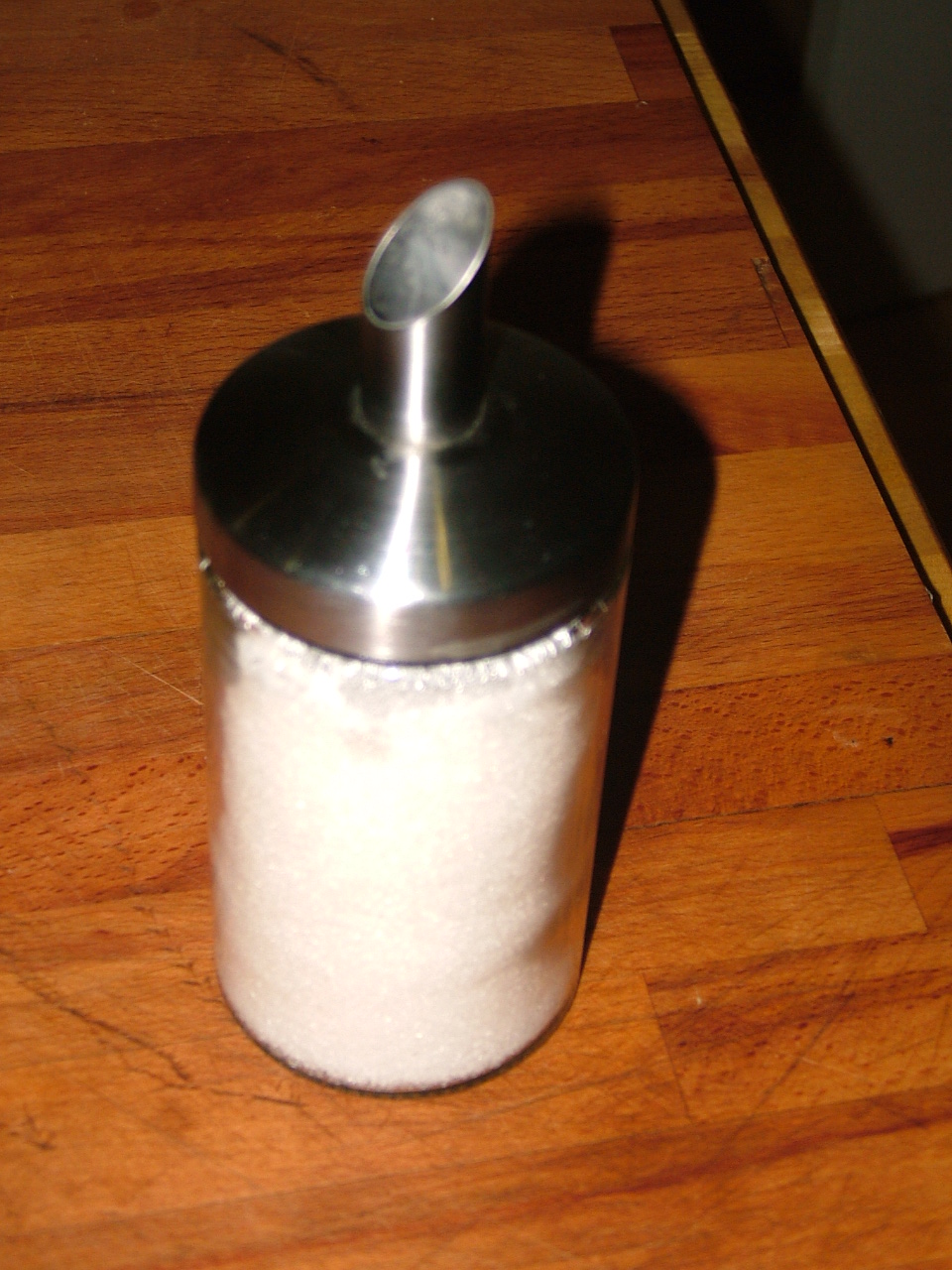
Thought I’d share with you all what I consider to be an essential piece of Vicarage equipment: my sugar shaker. I know that it’s another year until you can add this to your Christmas list again, but at £3.05, I reckon you could sneak this in with a cup of coffee and an almond croissant at the Ikea cafe and not notice the strain on your purse.

This great piece of kit allows me to serve endless cups of tea and coffee for Vicarage callers without the added faff of pouring sugar into a bowl. And without people putting their wet stirring spoons back into the sugar and making coffee sugar clumps (yuck). Each shake delivers a teaspoonful of sugar – easy peasy.

Read Full Post »

Last night we ate one of our favourite Malaysian dishes for tea at the Vicarage. I love to cook this reminder of our 51/2 years in South-East Asia. And to provide ginger warmth in a chilly kitchen. It’s easy, delicious and only uses a single dish (tho’ you might want to use a wok for some greens on the side aswell). It’s expandable for lots of people and is not too foreign for most visitors. Anyone who occasionally eats takeaway Chinese will love this.

Claypot chicken rice and bok choi

Ingredients

  • Chicken pieces (preferably skinned dark meat on the bone, chopped into bite size pieces by your local Indian butcher – but otherwise skinned thigh pieces are probably easiest or thigh fillets if you have bone-haters dining) – 1 to 2 thigh or drumstick pieces per person
  • Rice (we love Thai fragrant jasmine, but any will do) – about 120ml per adult and 60ml per child (dry measure)
  • Big chunk of fresh ginger (2-3″ here)
  • Soy sauces, light and dark (1-2 tbspns of each)
  • Oyster sauce (1-2 tbspns)
  • Sugar (1 tbspn)
  • Oil – sesame (1 tbpn if you have it) and vegetable (2 tbspns)
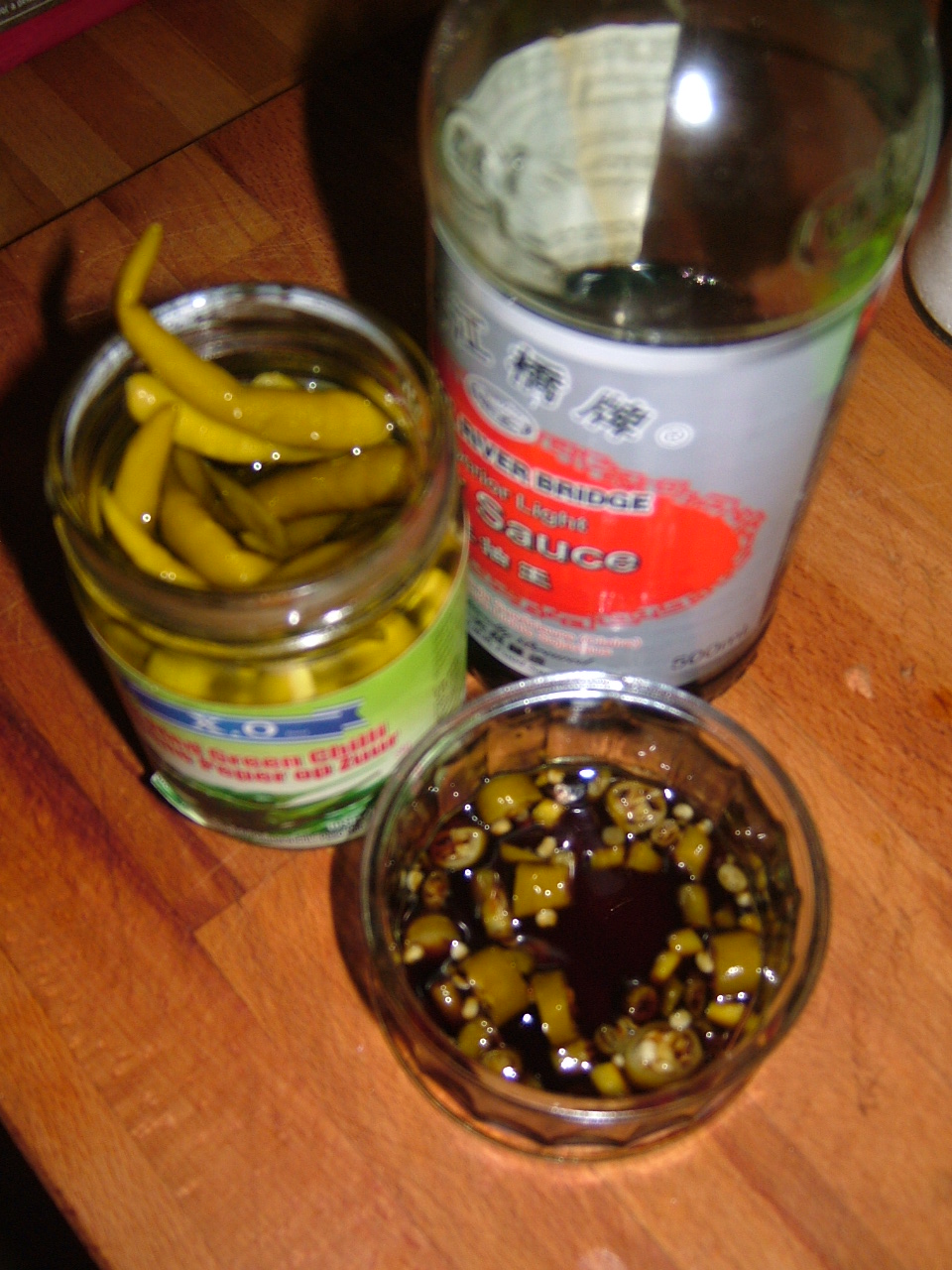
  • Extra treat for authenticity – pickled green chillis (chopped) on the side, marinaded in soy sauce

Ready to serve

You need about an hour from preparation to serving for this dish. But there’s time to supervise piano practice and maybe do some laundry in that hour. Or even drink a cup of tea. Or blog a recipe. You don’t need a clay pot to cook it either – I use a casserole dish. Mine has a glass lid which makes it easier to tell if stuff is cooked, but a cast iron casserole or a good sized saucepan would be fine. It’s rather easier with a non-stick pan because of the crunchy ricey bits (see below).

First pop the rice on. I have a rice cooker which has a cup sized at 160ml. For three adults and three fairly hungry children I used 4 cups. I cheated and used the rice cooker to measure the water to the right level, but the Malaysian way, which works just fine, is to put water in so that your forefinger, laid flat on the top of the (pre-rinsed) rice, is covered by the water. Put the cover on the pan and cook the rice until all the water is absorbed. This should take about 15 minutes.

Whilst the rice is cooking prepare the chicken and let it marinate in its sauce. You can quickly drizzle on the soy sauces, the oyster sauce, the sesame oil and add the sugar before mixing the pieces about to ensure that the marinade is coated over the chicken. Then you want to get the ginger’s juice without the pulp. The best way to do this is to first peel your piece of ginger and then grate or blend it. Pop the chewed up ginger pieces in a sieve and press down with a spoon to get the ginger juice out over your chicken portions. I used my chopper attachment from my stick blender to whizz the ginger first and a small plastic sieve.

Once all the water is absorbed into the rice, pop the chicken pieces and the marinade on top, together with the vegetable oil. Cover the pot again and leave it to cook on a low heat for 20 minutes. Don’t open the lid, as this will prevent the chicken from cooking thoroughly, as it steams on top of the rice.

After 20 minutes, open the lid and get a spoon and mix the chicken into the rice. You should find that some of the rice at the bottom of the pan has gone all crispy. Mmmm. Replace the lid and cook for a further 15 minutes on a low heat. Whilst this is going on, you might want to cook some veg.  It was Bok choi (with garlic, soy sauce and a little sugar) for us last night.

At the end of the 15 minutes, mix the rice and chicken up again to extract some more lovely crunchy ricey bits and serve with the veg and a side of chopped pickled green chillis in soy sauce for added zing. Warming, filling and family friendly.

Pickled chillis - ingredients and finished condiment

Read Full Post »

When I had a surplus of leftover gammon the other week I made two very pleasing dinners for the family, as well as sending the kids to school with gammon sandwiches for half the week. The second recipe I tried was this Spanish hotpot, an extrapolation from a suggestion from a Twitter pal.

This was so popular that the kids were begging me for extras, even when it was all finished up. I shall be making this again, with chorizo or bacon if leftover gammon is lacking.

Ingredients

1 onion, chopped
1 green pepper, chopped
Chopped leftover gammon
1 tin tomatoes
1 tin baked beans
1tspn smoked paprika

Fry the onion in a casserole dish until soft and translucent. Then add the pepper and gammon, the tomatoes and the beans, together with the smoked paprika. Add water to cover the ingredients and simmer for about 20 minutes until the peppers are soft. Serve with rice or crusty bread.

It is the smoked paprika that makes this taste particularly delicious, although you could use the unsmoked variety if you haven’t got the smoked. Other options for this dish would be peppers of other varieties, different varieties of pork – bacon or chorizo perhaps, cannellini or haricot beans rather than baked (maybe add some tomato puree instead), and olives might be good too.

Read Full Post »

« Newer Posts - Older Posts »