Feeds:
Posts
Comments

Posts Tagged ‘recipe’

Last night we had a great time at Messy Church – the next one in our series on the ‘I am’ sayings of Jesus. This time we were looking at ‘I am the True Vine’ and the craft team decided that they’d like one activity to be making playdough grapes to place on a vine drawn on a paper plate. The Vicar then volunteered me to make the playdough, knowing that I had a recipe up my sleeve.

Every playgroup leader has a  recipe for playdough – that ubiquitous soft dough which mums hate to find in carpets. But many folk I’ve spoken to have found their homemade dough to be too sticky or oily. This recipe always seems to come out well, though, as long as you don’t mind your fingers getting a bit stained with food colouring. It lasts a few weeks if kept in an airtight box in the fridge.

Ingredients

  • 1 cup (250ml) plain flour
  • 1 cup (250ml) water
  • 1/2 cup (125ml) salt
  • 1 tablespoon oil
  • 2 teaspoons cream of tartar
  • Few drops food colouring

All you do is pop all the ingredients together in a pan (preferably non-stick) and heat it up, stirring, until the dough magically forms. You can also do it by heating it in a covered dish in the microwave for 1-2 minutes but it’s so fast on the stove top I use that method. Also, the food colouring can make the inside of a microwave dish look rather interesting.

I know these were meant to be grape coloured, but the local shop only sells colouring for pilau rice and Indian sweets, so the colours are a little lurid and approximate. For Messy Church I made a quadruple batch, which was ample. It’s great fun to hold and knead – we gave a couple of handfuls away to some of the teenage tearaways who were lurking in the church yard. One came in especially as he reckoned it would help him to deal with stress.

Read Full Post »

Last week I had to bake for Cake & Chat and wanted something a little different. I also had a packet of rhubarb that I’d picked up on the reduced section at our local Morrison’s. And so here is a recipe for rhubarb pudding cake (I found the original online at a National Trust historic cakes site).

It went wonderfully with creme fraiche on Thursday and with cream on Sunday. I had to bake a second one this weekend as the first one had disappeared before lunch on Thursday. The leftovers are in the fridge tempting me now.

The recipe involves three separate sections – a cake batter, chopped and sugared rhubarb and a crumble topping. Althought it’s slightly faffier than a bog standard sponge, it’s worth the extra trouble for a delicious dessert cake. The one in the pictures has some gooseberries in it aswell as I didn’t have quite enough rhubarb second time round – they worked very well.

Ingredients

  • 1lb rhubarb (or gooseberries, or mix of both), chopped into 1″ pieces and sprinkled with 1-2tbspns brown sugar

Crumble topping

  • 2oz butter
  • 3oz plain flour
  • 1oz caster sugar

Cake batter

  • 3oz soft marg or butter
  • 3oz caster sugar
  • 2 eggs
  • 3oz self raising flour
  • 1 tbspn milk

Firstly, prepare the rhubarb, chopping it into chunks, or top and tail your gooseberries. Place it in a bowl and sprinkle the brown sugar over the fruit and set aside. Then make the crumble topping, chopping the butter into the flour and rubbing it into small crumbs with your fingers. Then stir in the sugar and set aside. Finally, in another bowl, cream together the butter and the sugar, beat in the eggs and fold in the flour. I do this using an electric hand mixer – there’s not enough mix for my freestanding mixer. Add enough milk to give a dropping consistency – if you’re using large eggs you might not even need the milk.

You’ll need an 8″ cake tin, lined with baking paper (or a reusable liner). Then you layer the cake up – first the batter, then the fruit (with another sprinkling of brown sugar) and finally the crumble topping mix. Bake at 190ºC (Gas 5, Fan 180ºC) for 40-45 minutes until the cake feels firm on top.

This cake is delicious hot or cold and best served with some sort of cream. It would be good with custard too.

Read Full Post »

The Vicar and I were married at St Andrew the Great in Cambridge. I’d been a member of the church for about eight years when we wed. The year before that the congregation had moved from the Round Church, a beautiful Norman building which had become far too small for the church to meet in. The move cost the church (as I recall) £1.8 million, as the new (to us) building needed extensive refurbishment, having been redundant for 25 years. The congregation gave generously, but there were a few more traditional fundraising efforts. One of these was a Round Church cookbook.

A recipe from the cookbook that I still use regularly is Rosemary Sennit’s malt loaf. It’s great for batch baking – I normally make three loaves at once and quick to put together. It’s egg free and therefore suitable for Asian Vegetarians & Vegans.  It’s low fat aswell and I now prefer it to the Soreen option – it’s less strong and squidgy, but still delicious with butter. All brilliant reasons to use this simple and tasty recipe.

Ingredients

  • 12oz self raising flour (1lb 8oz for double batch – you can double all the other ingredients easily yourself!)
  • 1/2 tspn salt
  • 2oz sugar
  • 4oz raisins/sultanas or mix of them
  • 2 tbspn malt extract (buy it in a health food shop eg Holland and Barrett)
  • 1 tbspn black treacle
  • 1/2 pt milk

Put the flour and salt in a bowl, adding the sugar and dried fruit and mixing together. Put the malt, treacle and milk into microwave jug. I heat it for 1-2 minutes on maximum heat and then mix it together. You can also do this in a pan over a low heat on the stove. Then pour the liquid into the dry ingredients & mix thoroughly. Pour everything into a well buttered 3lb loaf tin, or one lined with a reusable liner. Or if you double the batch you can make three smaller loaves in 2lb tins – this is what I normally do. Don’t use a paper liner as these will stick (I speak from traumatic experience).

Bake at 180ºC (Gas 4, Fan 170ºC) for 40-45mins or so until firm to touch, and a skewer comes out clean. I’ve found that the cooking time is about the same for both sizes of loaf. The original recipe said to cook a single quantity in a 2lb loaf tin in 75mins, so if you only have that tin size your deeper loaf will take longer – you might want to cover up towards the end of cooking to prevent the dried fruit from burning, though. Turn out and cool on a rack, or you can leave to cool in the tin. Slice and eat with butter (or low fat marg for the health conscious).

Read Full Post »

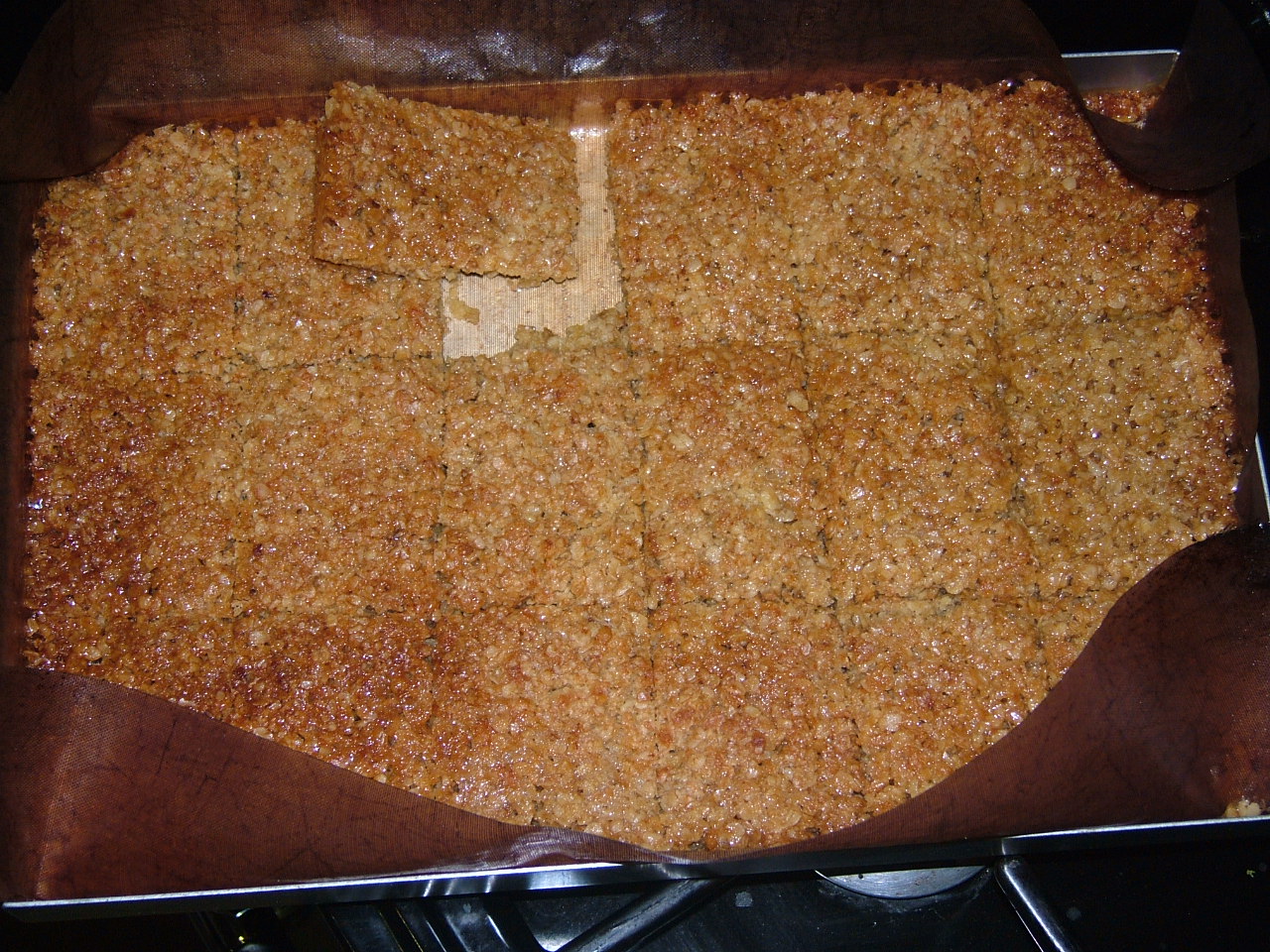
I can start with 4 ingredients in the cupboard and have 2 trays of flapjacks ready and out of the oven in less than half an hour. This is a delicious flapjack recipe – my absolute favourite, with a chewy texture and a delicious caramel taste. It’s my go-to recipe for home-made treats in a hurry. I was originally given the recipe by another ordinand’s wife when the Vicar was training for ministry and I must have baked these flapjacks at least 100 times since then without a bad batch. I usually make a double batch as it only takes a couple of minutes more than a single batch and there never seems to be any trouble in disposing of them.

Ingredients

  • 150g granulated sugar
  • 150g soft margarine
  • 4 tbspns golden syrup
  • 250g porridge oats

Melt the sugar, margarine and golden syrup together in a large microwave bowl (or in a saucepan on the stove if you don’t have a microwave) – it takes about 2 minutes on full power in my cheapo 750W microwave. To get the golden syrup out of my measuring spoon easily I dip the spoon (a metal one) in a mug of just boiled water before adding each spoonful. Once the sugar, marg and syrup have melted together, mix in the oats. Then pop the mix in a 8″x12″ baking tin, lined with silicone baking paper (or a reusable liner like I use), and flatten it down so that it’s evenly distributed and pop it in the oven.

Your oven needs to be pre-heated to 180ºC (Gas 4, Fan 170ºC). In my fan oven, the flapjack takes 15 minutes to cook, but can take 20-30mins if your oven isn’t as speedy or isn’t quite up to temperature at the beginning. Once it’s golden on top, remove from the oven and leave in the tin for five minutes before cutting into slices sized to your flapjack appetite (generally 21-24 in my experience) and leaving to cool fully in the tin. If you cook it a little longer, it’ll be crunchy rather than chewy, so you can cook differently according to your flapjack preference.

Read Full Post »

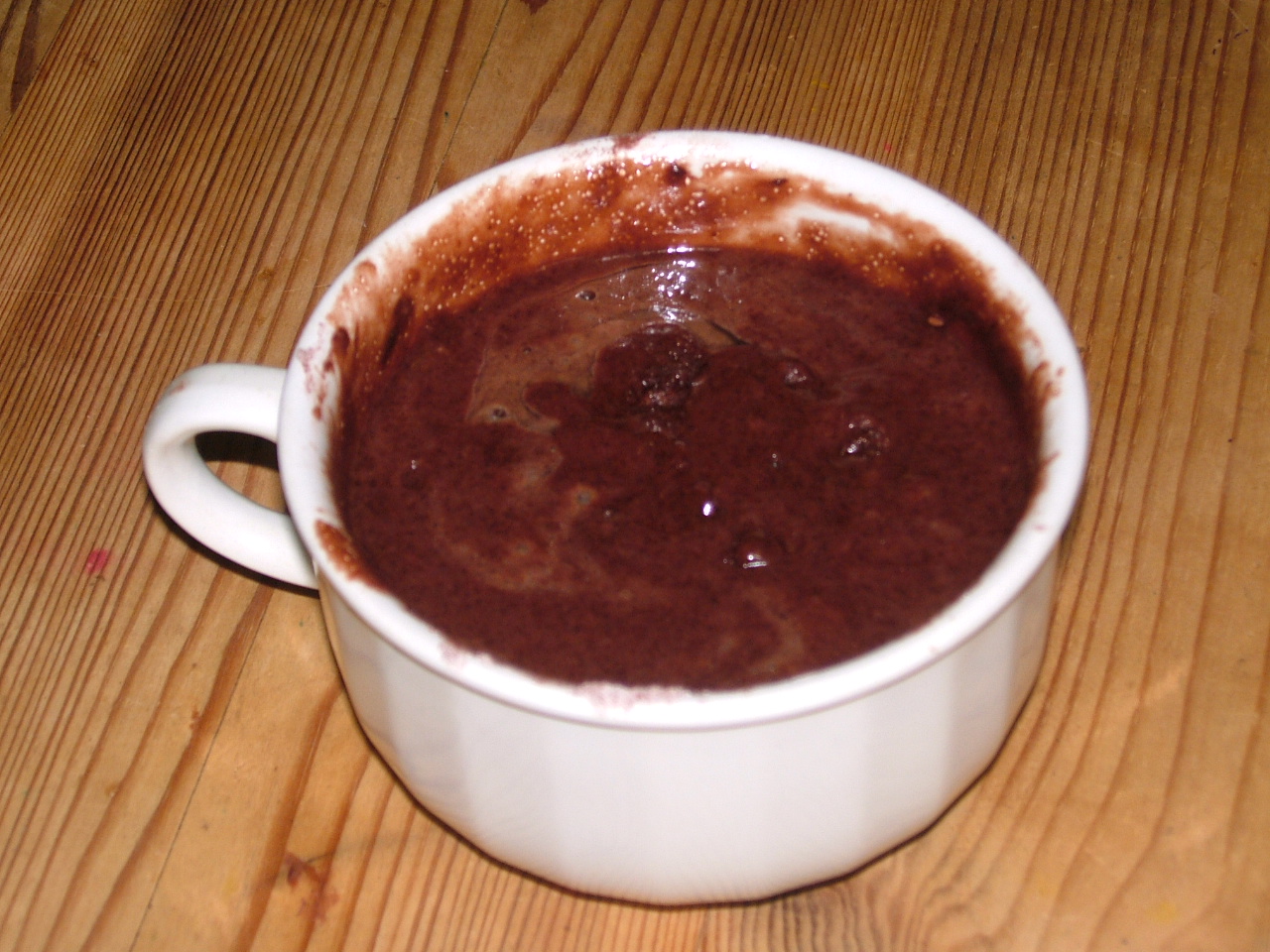
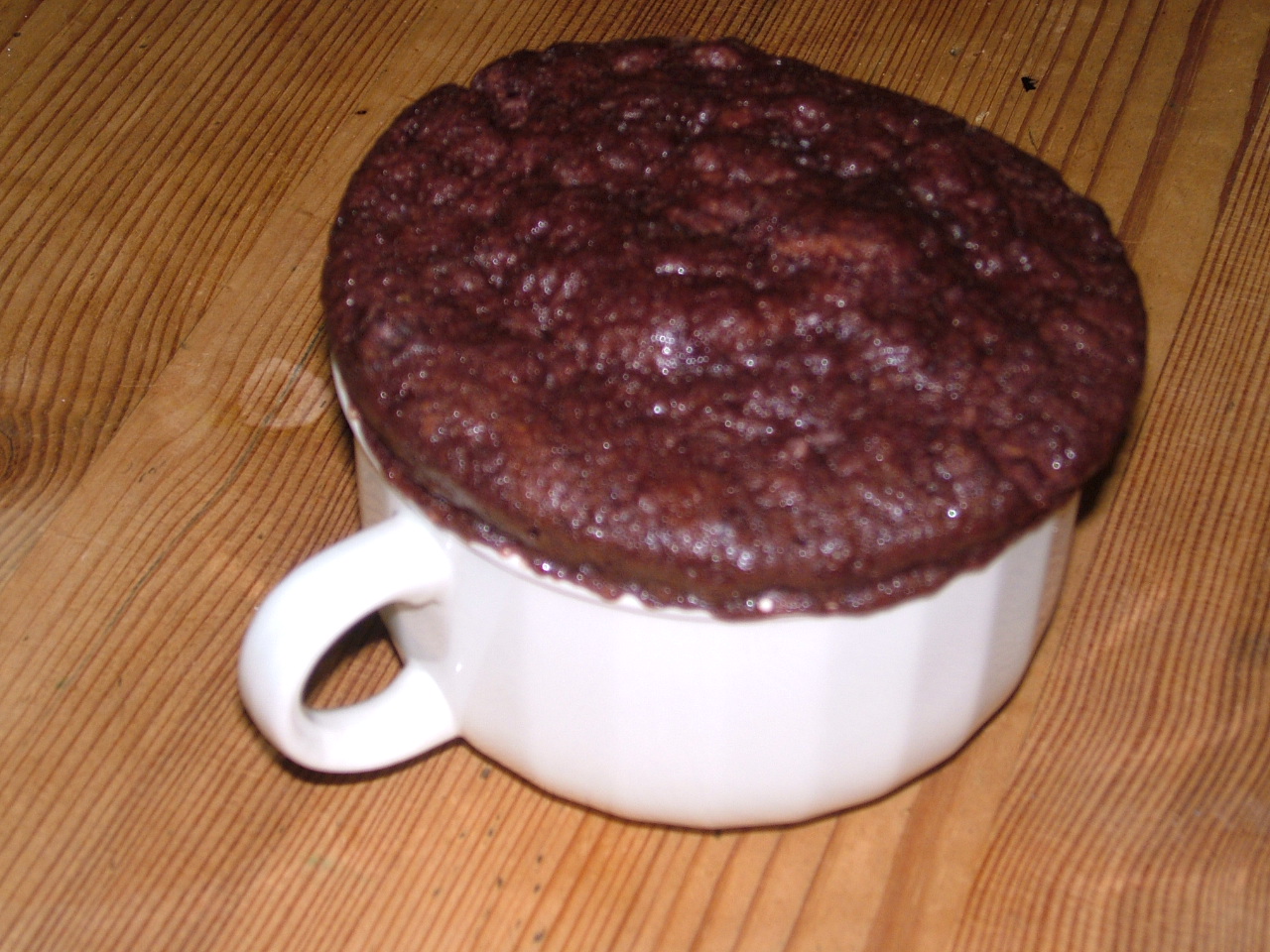
This week we had a quiet Sunday lunch at the Vicarage – it was just our family: Rocky had an invitation to lunch out and I’d been disorganised about having folk over. So for pudding I decided to trial a recipe I saw on 22 Words a while back. It’s a chocolate sponge speedily cooked in a  microwave in a mug.

It was a great success with the Vicarage crowd, and two portions served four of us generously (the Engineer was not in a puddingy mood). It would be lovely served with vanilla ice-cream, which was lacking in our freezer so we ate it with lashings of double cream (a half pint between us – eek!).

The recipe was originally titled ‘3 minute brownies’ but what you get is more like a hot sponge pudding. Although it takes about 3 minutes in the microwave, total production time was rather longer – a whopping ten minutes for two of them, I reckon. A perfect pause time between courses, actually.

Ingredients

  • 4 tablespoons self-raising flour
  • 4 tablespoons granulated sugar
  • 2 tablespoons cocoa powder
  • 1 egg
  • 3 tablespoons milk
  • 3 tablespoons oil

First, mix the dry ingredients (flour, sugar, cocoa) in your mug. My mug (more an enormous cup, actually) had a capacity of 300ml, and I think this is about the minimum you need. Then break in the egg and add the oil and milk. Mix all together until you have a smooth batter.

Pop it in the microwave on high heat for 3-4 minutes. Mine took 3 1/2 minutes in our 800W basic Matsui machine. The sponge feels pretty wet, but is firm to the touch when cooked. Spoon into a bowl and enjoy with cream or ice-cream.

Next time I might mix up the batter in a jug for ease of stirring (although this would add to the washing up, always an important consideration I feel). And I’d quite like to try experimenting with making a lemon version. I’ll report back on that one. In the meantime, why not try it for pudding this evening?

Read Full Post »

Another week, another baking session. This cake is very moist and zingy with orange as you make it using the whole fruit, skin and everything. It’s also very simple as there’s no strenuous mixing involved.

The original recipe was in cups, but being a British baker, the inaccuracy of filling measuring vessels makes me nervous, so I have given a weight translation based on my cup measuring last night.

Today I topped this with a couple of candles for little Lollipop who was two, and we sang her Happy Birthday at Cake and Chat (the school mums coffee morning that I hold). I don’t think she actually ate any of the cake (more for us mums…), as it doesn’t really have enough butter icing for smaller people, but she seemed to enjoy blowing the candles out. This cake would also be good served warm with cream as a dessert.

Not exactly the WHOLE orange cake...

Ingredients

1 orange, including the skin
180g melted butter or soft marg
3 eggs
1 cup/220g caster sugar
1½ cups/210g self-raising flour

Put the marg in a microwave or on the stove to gently melt. Whilst that’s on, blitz the orange in a blender, having chopped it first so you can remove the pips and that white pith in the middle. I use the mini chopper that came with my stick blender.

Put the melted marg and the pureed orange in a mixing bowl and stir in all the other ingredients to make quite a sloppy batter. Pop in a greased and/or lined 8″ cake tin and bake for 40-45 minutes at 180°C (Gas 4).

My original recipe came with an icing made with icing sugar, orange juice and zest and melted butter. If you like your cake very sweet feel free…

Read Full Post »

This week I’ve not got a baking recipe for you. Instead I thought I’d share a Vicarage supper recipe. For Sunday lunch this week I cooked a gammon joint (I really must blog that recipe sometime soon aswell). The Vicar had bought the gammon, and it was on offer. Being a Scotsman, therefore, he arrived with a joint that was larger than usual. We love gammon and very much enjoyed our lunch, but there were lots of leftovers.

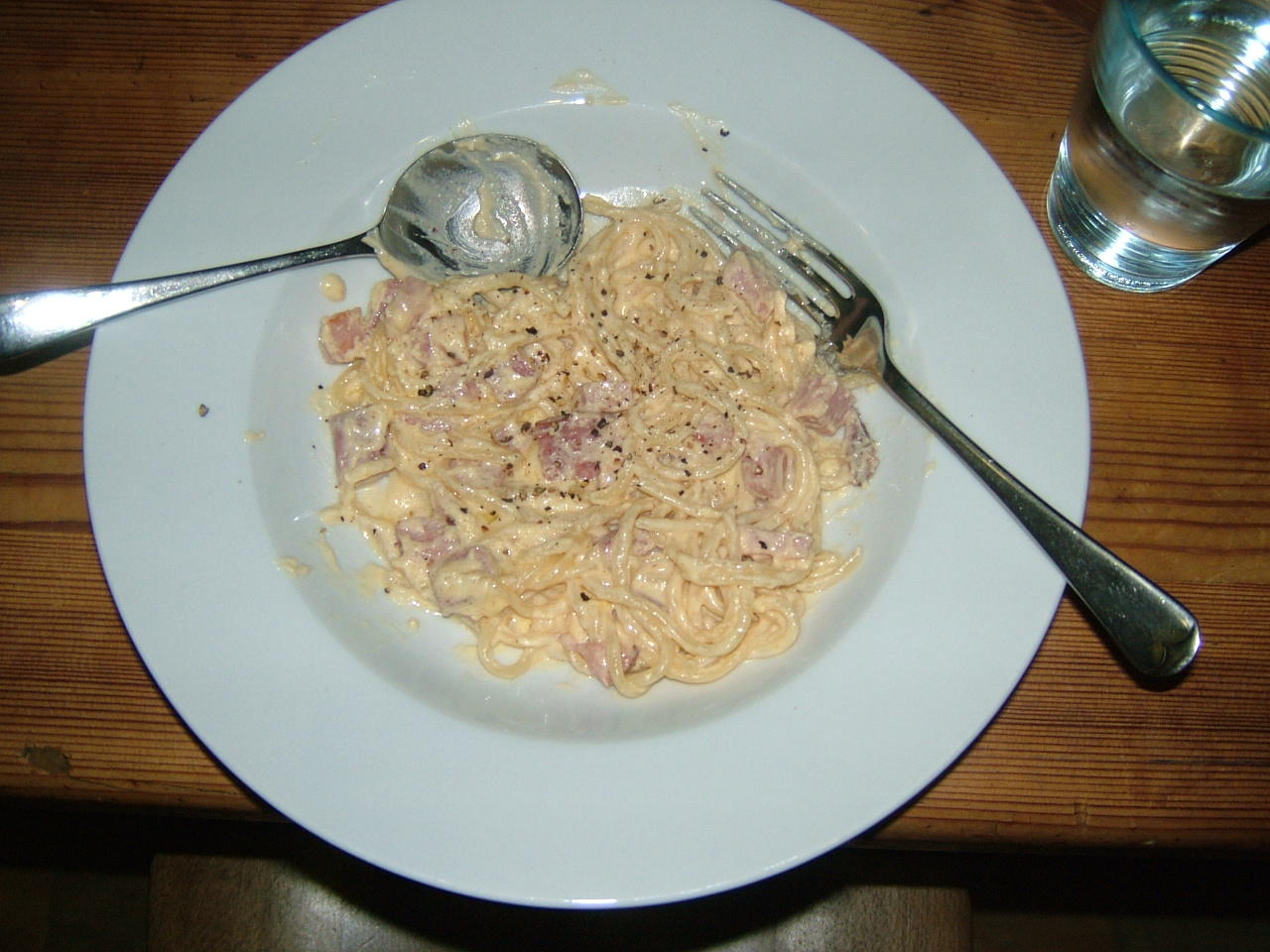
Normally, I’ll use leftover gammon for sandwiches and a pasta bake with cheese sauce. But I didn’t feel like a pasta bake and there was far too much left for sandwiches. So I did what all social media junkies do: I tweeted my request for recipes for leftover gammon. And bingo! Spanish hotpot, rissoles and  many other great suggestions. One of the dishes I was reminded that I could make was a spaghetti carbonara. I often find recipes a bit of a pain when they are for four, as we almost never have an easy number eating. So I’ve organised this carbonara recipe per person:

Ingredients

Per adult, you will need (I used 5 times this recipe for 3 adults and 3 kids):

  • 1 egg yolk (look at it as an opportunity to make meringues)
  • 2tbspns double cream and 2 tbspns creme fraiche (or other proportion to make a total of 60ml if you’ve not got those in the right quantities)
  • 40g grated parmesan (or emmental, gruyere, mature cheddar)
  • 70g cubed gammon, bacon or pancetta
  • 1tbspn dry vermouth (or white wine, or leave it out altogether)
  • 10g/1tbspn butter
  • chopped parsley, black pepper to garnish

First put the spaghetti on to cook.

Then mix the cream and creme fraiche with the egg yolk and cheese. I mix it in a jug so it’s ready to pour out when the spaghetti is cooked.

Then fry the bacon/gammon until sizzling and crispy. Add the vermouth to the bacon and wait until the liquid has reduced and you have a good saucey consistency.

Then all you do is wait for the spaghetti to be cooked. Drain the cooked pasta and return it to the saucepan. Add the bacon with its sauce and the butter. Put it on a low heat and add the egg mixture. Gently stir until the sauce has warmed up. Serve with parsley and black pepper (or not, if your kids are fussy or you’ve run out).

Enjoy with a glass of wine. Or you might have to wait until after the trek down the M5 to piano lessons.

Read Full Post »

Wednesdays is my baking day and since the recipe for lemonies seemed to go down pretty well the other week, today I’m going to share another Vicarage favourite bake. I’ve adapted the recipe from one in an Aussie cookbook sent to me by my oldest friend, who now lives in Sydney.

Wildwoman is a big foodie and thought I should would enjoy Bill’s food, which I did, very much. This cake has become a staple in our house, where we always seem to have some overripe bananas attracting fruit flies in the corner of the kitchen.

If you have a kitchen mixer, like a Kenwood chef, this is extra easy, but it should be just as simple with an electric mixer, or even to do by hand. Both versions are great. The pecans seem to almost caramelise as they bake, so I think it’s my favourite. But there’s also something about chocolate and bananas…

Choc Chip or Pecan Banana Loaf

Ingredients

250g/8oz self raising flour
250g/8oz caster sugar
125g/4oz soft margarine
4 ripe bananas
2 eggs
1 teaspoon vanilla essence
150-200g/4-6oz chocolate chips or 100-150g/3-5oz chopped pecans

Plop everything in your mixer, or a bowl, and mix together. The batter doesn’t need to look too smooth – mine always look pretty lumpy. If your bananas are not very ripe at all, you should probably mush them up separately with a fork first. Then pop the mix into a lined (I use a nifty pre-cut reusable silicone liner) 2lb loaf tin.

Bake for 1hr-1hr15mins in your oven at 180ºC (Gas 4, Fan 170ºC). When it’s done, it will be firm to the touch and a skewer should come out pretty clean. Leave it to cool in the tin. This cake keeps really well, if you can manage not to eat it.

Here’s last week’s Pecan Banana loaf, which was popular with both the family and the gang at Cake and Chat.

I really hope you're not here for the quality of the photography

Read Full Post »

As anyone who follows me on Twitter (or is a friend on Facebook) knows, I spend a lot of time in the kitchen. My kitchen time is especially intense on Wednesdays, which is my baking day in preparation for the weekly coffee morning I organise which  is mainly attended by school gate mums.

Every week I bake at least two cakes or biscuity or bready type things. Others often bring toast or crumpets, and we eat together and talk about how to solve the problems of the week. This morning it was improving working memory in dyslexic and ADHD affected kids.

This morning’s Cake & Chat delicacies from the Vicarage Kitchen were malt loaf, apple turnovers and lemonies. When I mentioned the lemonies on Facebook, my friend Snap asked for the recipe. Neatnik at Cake and Chat was also very keen on them, so this recipe is also for her.

I’ve decided that the only way to blog recipes is to give up the exalted aim of photographing step-by-step cooking, but to be content with a finished product pic. My photography skills are just not up to those of the Pioneer Woman, whose recipes always look so easy as she shows the whole procedure from cast of ingredients through to half-eaten plateful.


Just the finished product, I'm afraid. Delicious though.


The original recipe book name for lemonies is Bahama meltaways. I renamed them lemonies, as they are like a lemon brownie, with a shortbread base.  Also I have no idea what the Bahamas have to do with a traybake. The topping is sweet and chewy like a brownie, but with a great lemon kick. The recipe was originally in a Royal Scottish Country Dance Society cookbook given to me by my most excellent mother-in-law, who knows a thing or two about baking.

Lemonies

Shortbread: 3oz butter, 5oz plain flour, 2oz icing sugar

Topping: 8oz granulated sugar, 2 eggs, 2tbspns lemon juice, 2 tbspns plain flour, 1/2 tspn baking powder

I make this the quick way, using my food processor to blitz the flour and butter for the shortbread base before pulsing in the icing sugar. But if you don’t have a processor, just rub the butter into the flour until you have a fine sandy mixture. Then mix in the icing sugar.

Scatter the mixture in a tin (9×11″/23x28cm) which you have lined with baking paper or greased well. I have reusable liners cut to fit the tin, which saves lots of hassle when baking but is a bit of a faff for washing up. Flatten the mix down with your hand and put it to bake at 180ºC (Gas 4, Fan 170ºC) for 15 minutes.

Then mix all the topping ingredients together in a medium bowl or a jug, and then, when the 15 minutes are up, pour over the partly cooked base. Return to the oven for another 20-25 minutes until the topping is golden and set.

Leave to cool for 5-10 minutes and then cut into squares. These are quite sweet, but have a wonderful crisp and chewy texture.

Read Full Post »

As I mentioned before, this Christmas holiday we had Borneo Girl and her family to stay. One evening her son, Mendez (ably assisted by his dad), cooked pizza for the kids for tea. In the discussion on dessert, there was a bid for dessert pizza. A new concept to both families but dreamt up by the children as the ideal follow-up to normal pizzas.

So I noodled about the internet a bit and we came up with the following recipe:

Basically, you make a normal pizza dough, top it with melted butter and sugar before putting it in the oven. Then add sweeties and ice-cream sauce before serving. If you were feeling healthy, you could top it with sliced banana, apple (slightly precooked), pear or peach before cooking. We didn’t try that this time, though.

Pizza dough
400g strong white bread flour
1 tspn salt
1 tablespoon olive olive
1 sachet easy blend yeast
(Or just use a bit of left over dough from your main pizzas – these don’t need to be that big)

Toppings
Melted butter
Sugar

Sweeties
Chocolate/toffee/strawberry sauce
Fruit?

Mix dough ingredients with warm water to make soft dough. Knead for about ten minutes. Leave in a warm place to rise for an hour or so. Then roll into 3 normal size pizzas, although dessert pizzas are probably better about half that size ie you could make about 6 from this recipe. Place on a greased baking sheet, or one topped with baking paper (I use those reusable sheets).

Brush with melted butter and sprinkle sugar over. Place in oven at around 240°C for 10-15 minutes.

Once out of the oven, add sweeties and sauce. Eat and enjoy.

The Queen and Mazda enjoying dessert pizzas

Read Full Post »

« Newer Posts - Older Posts »