Feeds:
Posts
Comments

Posts Tagged ‘history’

Our Vicarage was beginning to empty out earlier this year. Our lovely Persian lodgers found a flat and moved out just before their baby was born. The Joker got himself an apprenticeship at a law firm in Sheffield after his two wonderful years volunteering at The Oakes, the Queen is working hard at a proper job in Lancaster and the Engineer is mostly at uni now. It was beginning to feel a bit quiet in our Victorian vicarage – the Vicarage Hound only barks when he wants a chew.

So the Vicar and I had a little pray about the next stage of Vicarage life, asking the Lord to guide our steps. And of course, that same week a lady at church told us about her friend who was having trouble finding a new home with her two small daughters. And now we have the Gentle Gs living in the attic whilst they continue to look for somewhere more permanent. And then we had a call from a minister in London who had a church member starting a job very close to us here, and so this Saturday we have a young man coming to stay whilst he settles into a new life in West Brom.
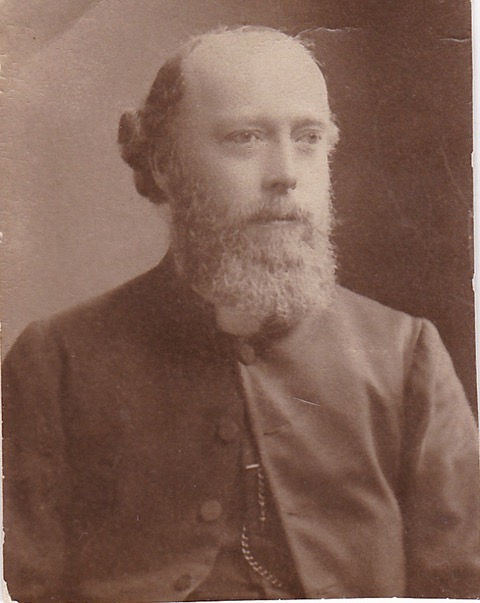
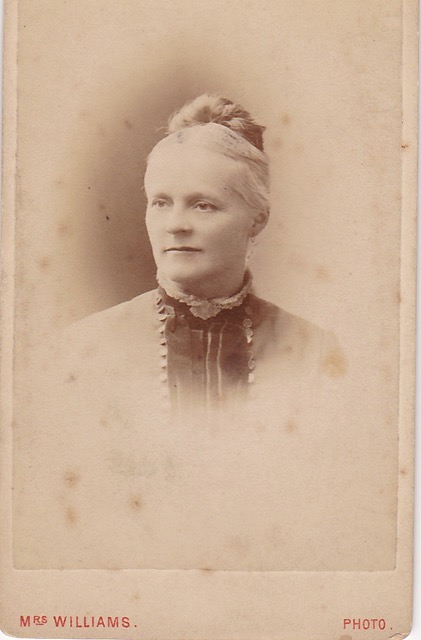
Meanwhile, I’ve been rereading some emails from the great granddaughter of the fifth vicar of our church, Rev Arthur Benjamin Irvine. Arthur was in post here from 1874 to 1902. He lived in the Vicarage with his wife Louisa and their seven children. I think this may be the last time that nine people lived here at once, although the Vicar and I are always up for a challenge. Who knows who will join us next?
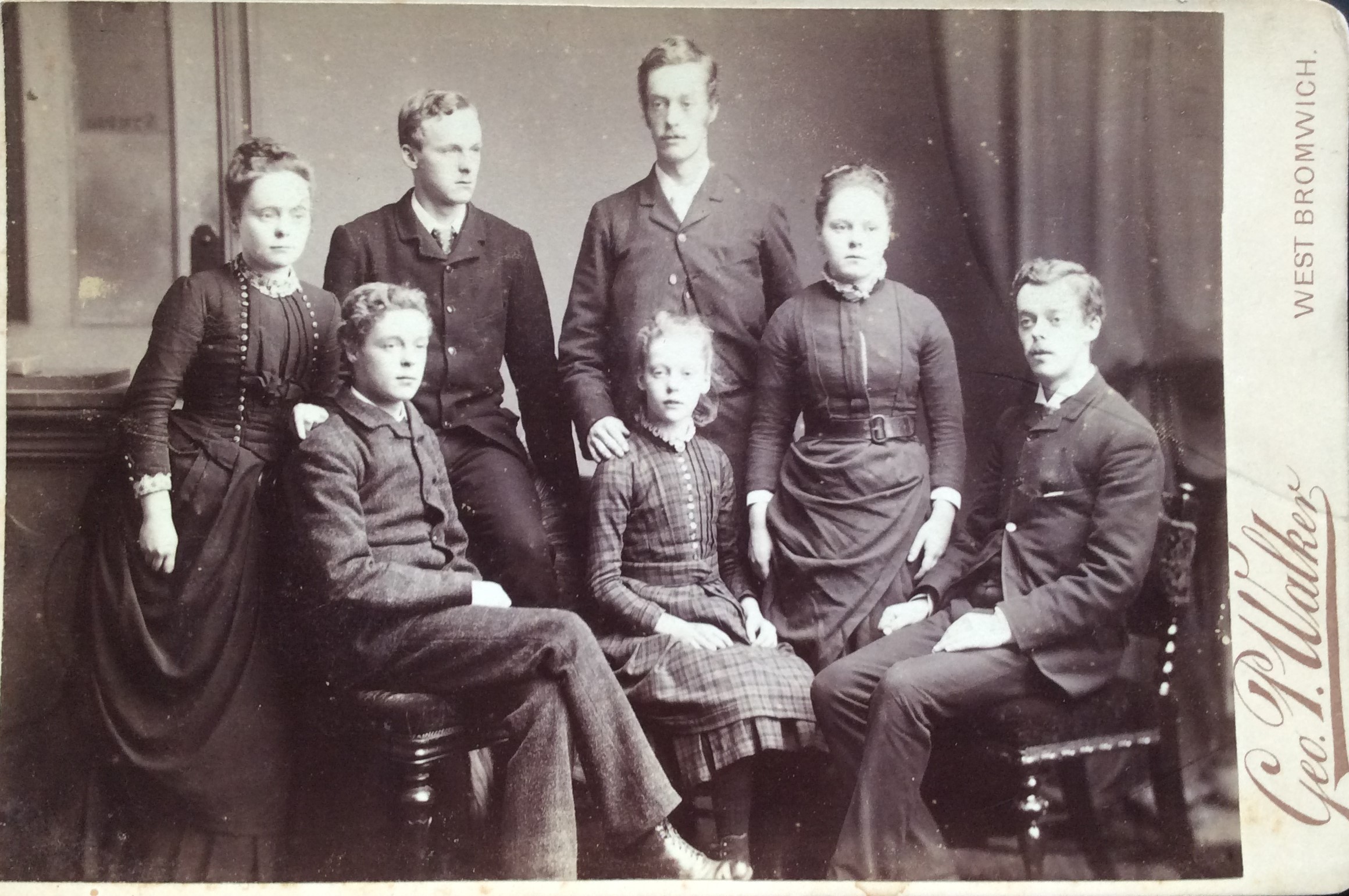
The Vicarage Children, Amy, William, Maziere, Arthur, Louisa, Constance, John. (Guessing the order from left to right from their ages, and if Louisa was about ten in this photo, taken in about 1885).

Thanks to one of Arthur and Louisa’s great granddaughters, who came to visit our church in 2019, I have some more pictures and stories of life here in the Vicarage in the second half of the reign of Queen Victoria. So there are more stories of the Irvine family to come. I’m not sure I’ll have the full lowdown on how all nine of them bumped along together in the Vicarage, but I like to imagine that it wasn’t all as neat and serious as they look in the photos and was perhaps rather more like our messy Vicarage life now. Mind you, it was almost impossible to get our kids to look at a camera at the same time when they were younger.


Read Full Post »

It’s been so long since I blogged, but I’ve had a project bugging me for ages. It’s a real privilege to live in an old house and to know the names (and profession!) of all its principal inhabitants since it was built. So I want to write about some of the people who lived here in the Vicarage, whose stories I’ve learnt about in the years we’ve lived here (fifteen in the middle of February!). And I want to write a little about the history of our church too. When we arrived in the parish, the then churchwarden was undertaking that enormous task and produced a book from his research, so I have an excellent resource to start from, but the internet gives opportunities to discover more since that project was completed.

So this year I’m going to write about those things, about Rev Arthur Irvine, who lived in the Vicarage with his wife and eight children for most of the second half of Queen Victoria’s reign. One of his daughters made some sketches of the Vicarage family and I have permission from their descendents to share them here. I’m going to share some exerts from our church magazines from the 1920s and 30s, and Rev Benjamin Willmore’s evangelistic talks given here in Lent in 1850, and all sorts of other scraps. I might also write about what’s happening here, now that this Vicarage is emptying of dependent children and taking on a new sort of character.

And to start off, today I have an extract that I found in the electoral roll that was kept from the 1940s to the 1950s. It’s an unusual entry, and gives a reason for removal from the electoral roll that I’m glad that we’re never going to have to log. There’s a modern block at 14 Florence Road now, alongside the Victorian terraced houses that make up the rest of the street.

The Gureton family, Fred, Elizabeth and Lilian, bombed out of their home on 19th November 1940.

The bombing is mentioned on the West Bromwich History Society site:

On the 19th November the Germans launched a nine-hour attack on the Midlands with wave after wave of bombers. In West Bromwich bombs hit, Richard Street South, Lombard Street, Constance Avenue, Florence Road, Paradise Street, the District Hospital in Edward Street, the Corporation Gas Showrooms next to the Central Library, Oak Road and the Corporation Bus Garage and the Palace Cinema in the High Street.
Sometime around 7pm German planes first dropped thermite incendiary bombs that would set the town alight to guide in the next wave of bombers carrying high explosive bombs. German targets may well have been the railway sidings, surrounding factories and the large gas-holder at Swan Village.

https://www.westbromwichhistory.com/wp-content/uploads/2016/12/WestBromwichBombing1940.pdf

In that same bombing, Edith Clare was injured in a house just along our road and died the next day, and Ernest Lamb, aged just 18, also from our parish, also died from injuries received that night. What an awful night for those families and for the whole parish. Rev Fred Sutton was the vicar then, and was still in post when some of our current church members joined – the connection to the past is close when you’re part of a community with memories.

Read Full Post »

Something I’ve been thinking about a lot recently is complexity. The complexity of our society and economy has been made clear as the government has made decisions during the pandemic which have had unforeseen consequences. They’ve not had enough information about every single person and their situation as they’ve tried to make provision for people in lockdown. So there have been changed plans and new initiatives as things have become clearer. The individual histories and situations of each person in a nation is almost impossible to imagine and to grasp. A very interesting thread on Twitter from Robert Colvile, director of the Centre for Policy Studies, outlined how pandemic policies backed up by databases – information – have been far more successful than those without.

Life is complicated! (Pexels.com)

I’m not in government (thankfully!) but I am involved with some other complex and difficult situations. And I can see that decisions, or pronouncements about decisions, are often made without enough information, and certainly without all the information. It’s a blessing of aging, of experiencing difficulties and struggles as well as joy, that you gain a much bigger grasp of complexity. That you learn to see the politics, the relationships and the history behind things. I find that I often feel overwhelmed as I get a glimpse of complexity, especially where there are decisions to be made.

But that has also given me a bigger vision of the greatness of the LORD, who sees everything from the beginning to the end, who has all the information, in all its complexity. He is never overwhelmed, he grasps all the politics, the relationships and the history. Praise God for his understanding of all that he has made.

The Lord looks down from heaven;
he sees all the children of man;
from where he sits enthroned he looks out
on all the inhabitants of the earth,
he who fashions the hearts of them all
and observes all their deeds.

Psalm 33:13-15

Read Full Post »

We’re settling into a new normal here in the Vicarage, as I expect many of you are. And in the second day of homeschool a certain amount of disillusionment has set in. Turns out that learning Tudor church history from a textbook is not that easy. But then we discovered that if you read it to yourself out loud and record it, you can actually concentrate on Henry VIII’s vacillations about communion without being distracted by squirrels.

The day finished with our small group meeting over Zoom. Although a couple of members couldn’t join us – it’s going to take a while to get everyone up to speed with the technology. But we also had the blessing of a group member who can’t usually attend because he lives too far away. I think that many churches will be doing many things – including groups – differently when this is all over.

What I won’t be doing differently in the future is my hair. I like my haircut. But for now it is certainly going to be different. I called my hairdresser to make an appointment a couple of weeks ago because it was getting a bit long, but she was off with a bad back. So I was wondering what to do about my fringe and had been thinking about finding someone else to do it. And now I can’t do anything! Except ask the Vicar or one of the boys to cut it *nervous face*. I have thick hair in a shortish bob and a heavy fringe so when it grows I start to resemble Hamish the Highland Cow, a firm favourite with our kids when they were young. I don’t keep toffees in there though. Yet.

Hamish

Read Full Post »

Storm Dennis decided that the Vicarage needed a bit of break. So our phone line stopped working two weeks ago. The winds had whipped around the Vicarage and dislodged the wire precariously attached to the side of the house as it makes its way into our junction box and wifi hub.

The phone fixer chap arrived this evening and made some interesting observations:

  1. We had two defunct cables hanging off the house.
  2. The current cable had frayed as it swayed in the wind – which is why we had occasional wifi but no phone.
  3. The wires to the house have been there for about 40 years.
  4. The wire inside the junction box was of a type made during the First World War – the insulation is a giveaway apparently.

The information about the wire reminded me of a snippet I read just the other week in a bound collection of church magazines I found in the churchwardens’ vestry. These magazines were published in 1925, and so I can tell you that the first phone line was installed in our house in October 1925. Don’t forget our number: West Bromwich 172. Sadly, our telephone number, unlike the wiring, has no continuity with the original. And I doubt the Church of England will give you advice if you’re moving overseas either. And alas, we have no choir, for ladies or anybody else, but any offers of help in the matter of church music would still be most welcome.

IMG_20200228_183303853

Read Full Post »

This summer I was looking for ways to help the Queen to improve her ‘working memory‘. She struggles to hold facts and numbers in her head for long enough to manipulate them with ease. Or where she just put something down.

So I went on a little google hunt and found a brilliant game, which  is designed to teach facts and improve working memory. It’s called Brainbox and consists of a series of cards on a variety of subjects. The set we got this summer was on nature. Other topics include maths, history, football and the World. You take it in turns to study a card for ten seconds. You can play on line to see what sort of cards are included (you’ll have to concentrate!). Once your ten seconds are up, you roll a die and answer the question with the corresponding number from the back of the card.

The children loved this game – it’s quick to play, interesting and doesn’t seem like hard work, as you might expect from an educational game. It comes in a robust box which means that it will last. So many games seem to come in boxes not designed to store their contents for longer than a couple of plays, which drives me loopy. I have the maths and a history one tucked away for Christmas stockings. Mind you, as these evenings get darker and more uninviting, I might be getting them out before then.

Prices on Amazon seem to range between £5-£10. I originally bought them from the Happy Puzzle Company, who do an excellent range of games, but they charge £12.99.

Read Full Post »